
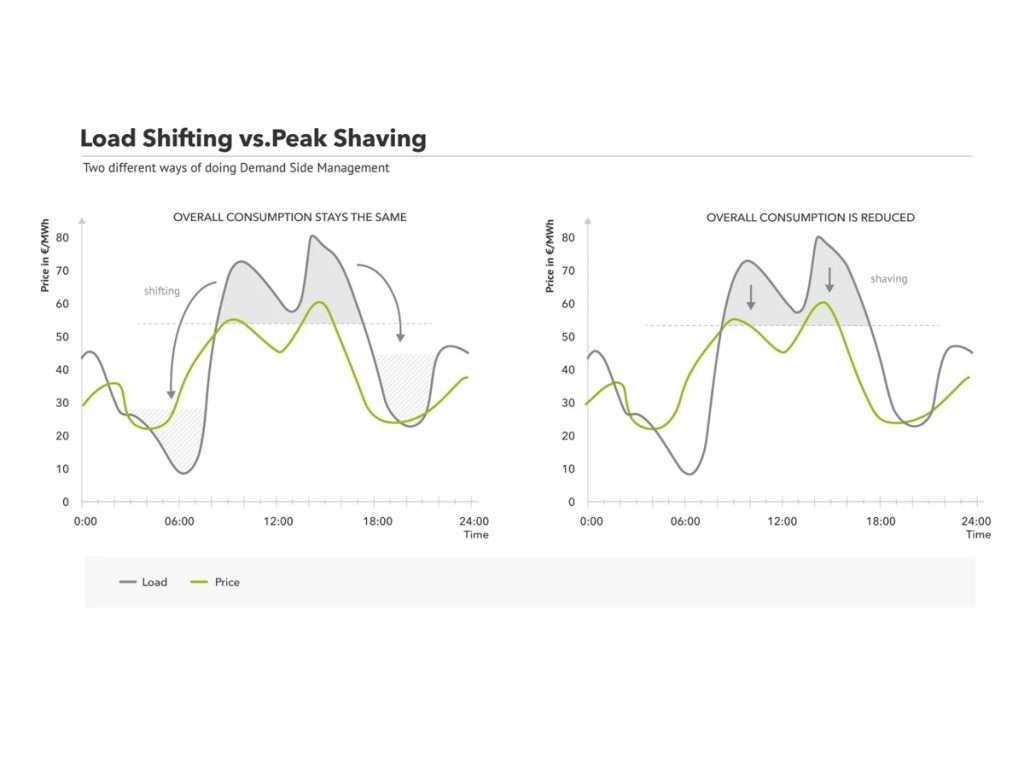
If you’re looking to slash your business’s electricity bill, you’ve likely encountered the terms peak shaving Und Lastverschiebung. They’re two of the most powerful strategies in energy management, often mentioned in the same breath. But while they share a common goal—reducing energy costs—they are not the same thing.
Choosing the right strategy can lead to significant savings, increased grid stability, and a smaller carbon footprint. Choosing the wrong one, or misunderstanding the concepts, can mean leaving thousands of dollars on the table.
So, what exactly is the difference between peak shaving and load shifting? In short, peak shaving is about reducing your power consumption at specific, high-cost moments, while load shifting is about moving your energy usage to a different, cheaper time of day.
Let’s break down these concepts to help you determine the best approach for your business.
What is Peak Shaving?
Think of peak shaving like a sprinter conserving energy for the final burst. The goal is to avoid a short, intense spike in energy demand.
Definition: Peak shaving is the practice of temporarily reducing electricity consumption during periods of high demand, known as “peak hours.” These are typically a few hours in the late afternoon or early evening when grid demand is highest.
How it Works: Instead of drawing all your power from the grid during a peak period, you use an alternative energy source to “shave” the top off your energy consumption curve. The most common methods are:
Batterie-Energiespeichersysteme (BESS): Using an on-site battery to power your operations during peak hours.
Backup Generators: Temporarily switching to a diesel or natural gas generator.
Scheduled Curtailment: Intentionally turning off non-essential loads (like certain HVAC units or industrial machinery) for a short period.
Primary Goal: To reduce demand charges. These are fees based on your highest rate of electricity use (in kilowatts, kW) during a billing cycle, often making up a substantial portion of a commercial electricity bill.
Analogy: It’s like avoiding the surge pricing on a ride-sharing app during a rainstorm by waiting 15 minutes for the demand to drop.
What is Load Shifting?
If peak shaving is a sprint, load shifting is a marathon. It’s a broader, more strategic approach to managing Wann you use energy.
Definition: Load shifting is the practice of moving energy consumption from periods of high demand and high cost to periods of low demand and low cost.
How it Works: This involves scheduling energy-intensive processes to run during off-peak hours (e.g., overnight or early morning).
Example 1 (Manufacturing): A factory programs its high-energy machinery, like industrial presses or chillers, to run after 10 p.m. instead of during the afternoon.
Example 2 (Commercial HVAC): Pre-cooling a building during the cheap, morning hours so the air conditioning doesn’t need to work as hard during the expensive, hot afternoon.
Primary Goal: To reduce energy charges (the cost of the electricity you consume, measured in kilowatt-hours, kWh) by taking advantage of lower time-of-use (TOU) rates.
Analogy: It’s like doing your laundry at night when electricity rates are lower, instead of running the washer and dryer at 6 p.m. when everyone is home.
Key Differences at a Glance: Peak Shaving vs. Load Shifting
| Besonderheit | Spitzenkappung | Load Shifting |
|---|---|---|
| Primary Goal | Reduce Demand Charges (kW) | Reduce Energy Charges (kWh) |
| Timeframe | Short-term (minutes to a few hours) | Long-term (moving usage by several hours) |
| Strategy | Reduce consumption during peaks | Move consumption to off-peak times |
| Am besten für | Businesses with short, unpredictable spikes in usage | Businesses with flexible, schedulable energy loads |
| Technology | Batteries, generators, quick curtailment | Smart thermostats, energy management systems, programmable processes |
Can You Use Them Together? Absolutely!
The most sophisticated energy management plans often combine both strategies for maximum savings. This is where technologies like battery storage (BESS) truly shine.
A Combined Strategy Example:
Load Shifting: A warehouse uses its energy management system to schedule its electric forklift charging for after 8 p.m. (off-peak), saving on energy charges.
Peak Shaving: The next day, a heatwave causes a grid peak from 4 p.m. to 6 p.m. The warehouse switches to its on-site battery system, avoiding a massive demand charge by not drawing power from the grid during that critical window.
In this scenario, the business benefits from both lower energy rates Und reduced demand charges.
Which Strategy is Right for Your Business?
The best choice depends on your utility rate structure and your operational flexibility.
Focus on Peak Shaving if: Your utility bill shows high demand charges, and your facility has brief, intense periods of energy use. This is common for manufacturing, data centers, and commercial buildings.
Focus on Load Shifting if: Your utility offers Time-of-Use (TOU) rates with a significant difference between peak and off-peak prices, and you can easily schedule energy-intensive tasks. This is ideal for warehouses, water treatment plants, and some agricultural operations.
The first step is to analyze your electricity bill. Identify what you’re paying for: is it the demand charges (kW), the energy charges (kWh), or both? Understanding this will point you toward the most effective cost-saving strategy.
Two Sides of the Same Coin
Peak shaving and load shifting are not mutually exclusive; they are complementary tools in the modern energy manager’s toolkit.
Spitzenkappung is your tactical response to immediate, expensive peaks.
Load Shifting is your strategic plan for long-term, efficient energy scheduling.
By understanding the critical difference between reducing a peak versus moving a load, you can make informed decisions that lead to lower costs, a more resilient operation, and a positive step toward a sustainable energy future.
Kontaktieren Sie uns Heute!