
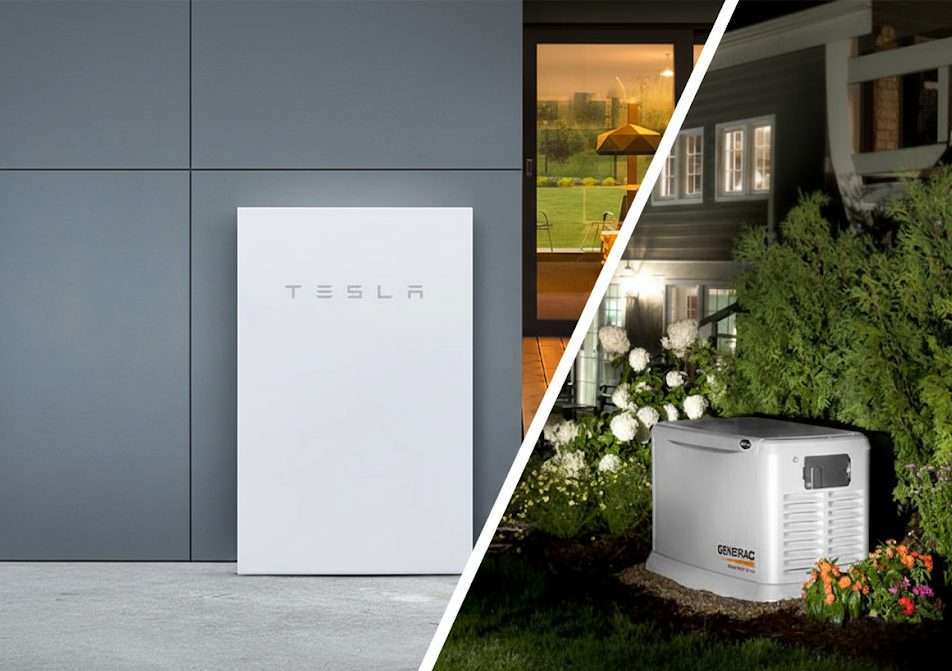
When the lights flicker and go out, the race for backup power begins. For decades, the roar of a gas generator was the definitive sound of emergency preparedness. But today, a new, silent contender has entered the ring: the home battery system.
The choice between these two options is no longer just about who gets your fridge running fastest. It’s a decision between a temporary fix and a long-term energy strategy. Let’s break down which solution is the right fit for your home, your wallet, and the future.
At a Glance: Battery vs. Generator
| Fonctionnalité | Home Battery (e.g., Tesla Powerwall, NextG Power) | Home Generator (Propane/Natural Gas) |
|---|---|---|
| Upfront Cost | Higher ($$$) | Lower ($$) |
| Source | Solar or the Grid | Fossil Fuels (Gas, Propane) |
| Refueling Cost | None (with solar) or Grid Rates | Ongoing Expense |
| Opération | Silent, Instant Switch | Loud, noticeable rumble |
| Emissions | Zero at your home | Carbon Monoxide & Fumes |
| Installation | Professional Required | Sometimes DIY-able |
| Daily Benefits | Saves money year-round | Only useful during outages |
The Generator: A Reliable, But Limited
Generators have earned their place for a reason: they’re a proven technology with a lower initial price tag. You can find them at hardware stores, and for smaller models, setup can be straightforward.
However, they come with significant strings attached:
The Fuel Gamble: They require a constant supply of fossil fuels, which can be scarce or expensive during regional outages or storms.
Noise and Pollution: Generators are loud and produce harmful carbon monoxide emissions, requiring they have to be placed far from windows and doors.
Maintenance Demands: They need regular engine maintenance (oil changes, tune-ups) and test runs to ensure they’ll work when called upon.
Single-Purpose: A generator sits idle until the grid fails. It doesn’t provide any financial benefit or energy savings when the power is on.
The Home Battery: Your Modern, Multi-Tasking Powerhub
Home batteries represent a fundamental shift. They’re not just backup; they’re an upgrade to your home’s entire energy system. While the upfront investment is higher, they solve nearly every generator drawback while adding smart, year-round value.
Why homeowners are making the switch:
Slash Your Electric Bill (Even When the Power’s On): This is the game-changer. With a battery, you can store energy when it’s cheap (like at night) and use it when rates are high (peak afternoon hours), a strategy known as “peak shaving.” Pair it with solar, and you can use your own sun-powered energy day and night.
Truly “Set It and Forget It”: Once installed, a battery system operates automatically and silently. There are no fuel cans to store, no engines to maintain, and no fumes to worry about.
Clean, Quiet, and Safe: Batteries kick on instantly, without a sound, and have no emissions, making them safe for any neighborhood and for indoor air quality.
Substantial Incentives are Still Available: The federal Investment Tax Credit (ITC) significantly reduces the cost. Heads up: This 30% tax credit for battery systems (when paired with solar) is currently set to decrease after the end of 2025. Acting soon can lock in major savings.
Cost Comparison: Upfront Price vs. Lifetime Value
It’s true: a whole-home natural gas generator will almost always have a lower installation cost ($7,000 – $15,000) than a full solar-plus-storage system designed to power your entire home.
But the real story is in the long-term math. A generator has continuous, hidden costs: fuel, maintenance, and eventual replacement.
20-Year Total Cost of Ownership (Estimate)
| Cost Type | Solar + Storage System | Whole-Home Natural Gas Generator |
|---|---|---|
| Upfront Cost (after incentives) | $30,000 – $40,000 | $7,000 – $15,000 |
| Fuel Costs | $0 (powered by the sun) | $7,500+ |
| Entretien | Minimal | $8,000+ |
| Replacement Cost | May include one battery replacement | Likely one full generator replacement |
| **Total Estimated Cost ** | $39,000 – $49,000 | $78,000+ |
Assumptions: System sized for whole-home backup, factoring in current energy prices and estimated maintenance. Your costs will vary.
Which One Is Right For You?
Choose a Generator if: Your primary concern is achieving the lowest possible upfront cost for essential backup power during infrequent, short outages. You have a well-ventilated outdoor space and don’t mind the noise, maintenance, and ongoing fuel expenses.
Choose a Home Battery if: You view backup power as a long-term investment. You want a silent, zero-emission system that also reduces your monthly electric bill year-round. You have or are considering solar panels, and you want to maximize your energy independence and resilience.
For most modern homeowners, the battery isn’t just a backup power source—it’s the cornerstone of a smarter, cleaner, and more efficient home. The question isn’t just how you’ll survive the next outage, but how you’ll power your future. Contactez-nous today for a long term sustainable solution!