
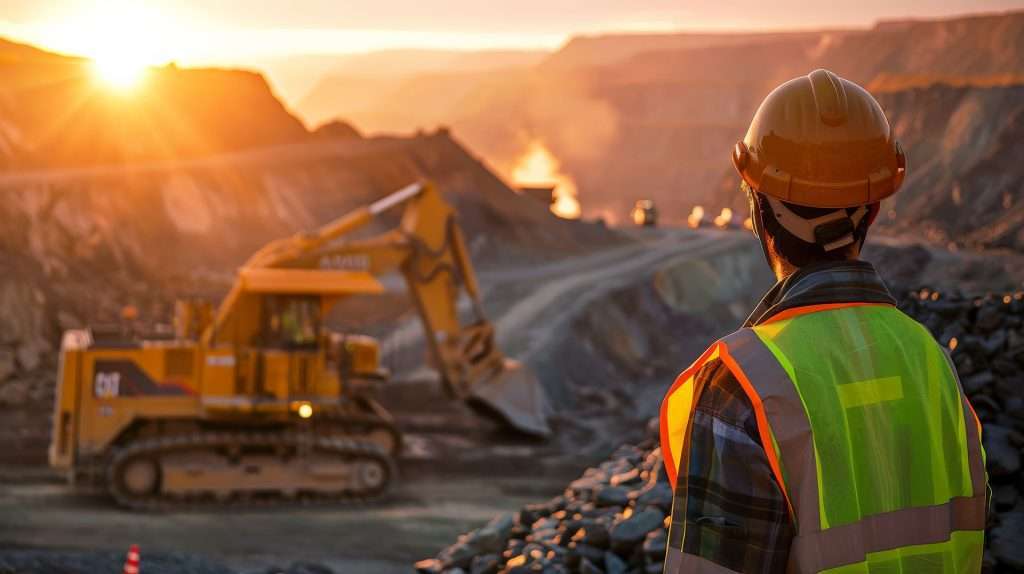
As Africa’s mining sector surges to meet global demand for critical minerals like lithium, cobalt, and nickel, the industry is undergoing a transformative shift toward sustainability and efficiency. Battery Energy Storage Systems (BESS) are emerging as a cornerstone of this evolution, enabling mining operations to harness renewable energy, reduce reliance on fossil fuels, and address the continent’s unique energy challenges. BESS is reshaping new African mining projects, driving electrification, and positioning the continent as a key player in the global energy transition.
The Rise of Africa’s Mining Boom
Africa holds vast reserves of minerals essential for the clean energy revolution, including 51% of the world’s cobalt, significant lithium deposits, and 80% of global manganese reserves. Countries like the Democratic Republic of Congo (DRC), Zambia, and South Africa are at the forefront, with new mining projects fueling economic growth and global supply chains for electric vehicle (EV) batteries and renewable energy technologies. The International Energy Agency projects that demand for lithium will increase 40 times, graphite 25 times, and nickel and cobalt 20 times by 2040.
However, Africa’s mining industry faces a critical challenge: unreliable power supply. Nearly half of the continent’s population lacks access to electricity, and frequent outages hinder industrial operations. Traditional reliance on diesel-powered generators is costly, environmentally damaging, and misaligned with global sustainability goals. Enter BESS—a game-changing solution that integrates renewable energy and stabilizes power for mining operations.
What Are Battery Energy Storage Systems (BESS)?
BESS are advanced systems that store energy, typically from renewable sources like solar or wind, for use when needed. They consist of lithium-ion or other battery chemistries paired with sophisticated management systems to ensure efficient energy distribution. In mining, BESS addresses the intermittency of renewable energy, stores excess power during off-peak periods, and delivers reliable electricity to power heavy machinery, processing plants, and remote operations.
By pairing BESS with solar photovoltaic (PV) systems or hydropower, mines can reduce diesel consumption, lower carbon emissions, and achieve cost savings. For instance, diesel-electric trucks consume 300-400 liters of fuel per hour, while electric alternatives paired with BESS can cut fuel use by up to 90%.
BESS in Action: Powering African Mining Projects
Several pioneering projects highlight the transformative potential of BESS in African mining:
Kamoa-Kakula Copper Mine (DRC): This major copper operation partnered with CrossBoundary Energy to deploy a 222 MWp solar PV system and a 123 MVA/526 MWh BESS, set to begin construction in August 2025. The project will provide baseload renewable energy, reducing reliance on diesel and supporting one of the world’s largest copper mines.
Angola’s Solar-BESS Integration: Angola is rolling out 48 solar PV systems with 719 MWh of BESS across multiple provinces, funded by a $1.44 billion investment. These systems will power mining operations and local communities, boosting electrification and economic development.
SustainSolar’s Uganda Pilot: In Uganda’s Kayunga district, a 60 kWp solar PV array with 148 kWh of lithium-ion BESS powers a mini-grid for 174 households and local businesses. This containerized system demonstrates how BESS can support small-scale mining and community electrification.
These projects showcase how BESS enables mines to operate sustainably while addressing Africa’s energy access gap.
Benefits of BESS in African Mining
Reliable Power Supply: BESS ensures consistent electricity in remote mining sites, mitigating outages and stabilizing grids with limited infrastructure.
Cost Savings: By reducing diesel dependency, BESS lowers fuel and maintenance costs. For example, on-trolley electric vehicles save up to 350 liters of diesel per hour.
Sustainability: BESS paired with renewables cuts carbon emissions, aligning with global ESG (Environmental, Social, and Governance) standards and attracting eco-conscious investors.
Scalability: Modular BESS designs, like NextG Power’s containerized BESS systems, can be scaled to meet the needs of medium or large mining operations.
Community Impact: Excess energy from BESS can power nearby communities, supporting UN Sustainable Development Goals like decent work and economic growth.
Challenges and Opportunities
Despite its promise, BESS adoption in African mining faces hurdles. High upfront costs, limited local expertise, and complex supply chains for battery minerals pose challenges. Additionally, the energy-intensive nature of mineral processing requires robust infrastructure, which is often lacking.
However, these challenges present opportunities:
Regional Collaboration: Initiatives like the Southern African Power Pool (SAPP) facilitate electricity trade and shared infrastructure, enabling BESS deployment across borders.
Local Value Chains: Developing domestic battery manufacturing, as seen in DRC and Zambia’s joint initiative, can reduce costs and create jobs.
Innovation: Advances in battery chemistries, like cost-effective sodium-ion batteries, could lower expenses and diversify supply chains.
The Road Ahead: Electrification and Beyond
The integration of BESS into African mining projects is a critical step toward sustainable industrialization. By leveraging abundant renewable energy potential—like the DRC’s hydropower or Angola’s solar resources—mines can transition from diesel to clean energy, boosting efficiency and competitiveness. Furthermore, investments in geological surveys and mineral processing, as advocated by the African Development Bank, can unlock new reserves and strengthen Africa’s role in the global battery value chain.
As the world races toward net-zero emissions, Africa’s mining sector is poised to lead with BESS as a catalyst. By balancing exploration, electrification, and sustainability, the continent can transform its mineral wealth into a driver of economic and environmental progress.
Ready to explore BESS for your mining project? Contact us and shape the future of sustainable mining.