
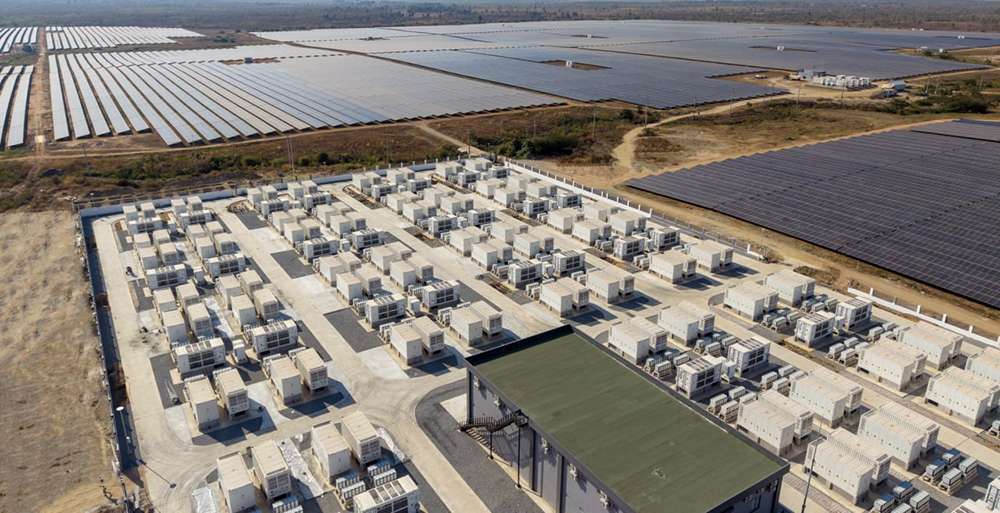
As Southeast Asia cements its status as a global manufacturing powerhouse, its factories are grappling with a hidden crisis: an electricity grid struggling to keep pace with explosive growth. In 2026, Vietnam, Thailand, and Indonesia are attracting record foreign direct investment in semiconductors, electronics, and EV assembly. Yet, sudden voltage dips, frequency swings, and brownouts are more than daily risks—they are direct threats to the bottom line, halting precision production lines and destroying high-value output.
Enter Southeast Asia BESS 2026. Sistemas de almacenamiento de energía en baterías have transcended their role as renewable accessories. They are now the critical bridge between surging industrial demand and grid reality, offering instant ride-through power, peak shaving, and seamless integration with private renewable deals. This is how industrial-scale BESS is turning power vulnerability into a decisive competitive advantage.
Manufacturing Boom vs. Grid Reality
Vietnam’s industrial sector, fueled by giants like Samsung and a wave of new semiconductor plants, saw electronics exports hit $126.5 billion in 2024 . Thailand’s Eastern Economic Corridor is pulling in data-center and EV battery investments—Digital Edge and Bridge DC broke ground on 100MW and 200MW facilities, respectively, in late 2024 . Meanwhile, Indonesia’s new capital Nusantara and Batam industrial zones are positioning the archipelago as the next assembly powerhouse. Electricity demand across these hubs is projected to soar.
The problem? Grid infrastructure wasn’t designed for this speed. Vietnam’s rapid solar rollout (now over 18 GW) has created acute midday surpluses and evening shortfalls, with curtailment in southern regions exceeding 60% during peak generation . Indonesia still struggles with grid instability, where diesel reliance costs $0.20-0.40/kWh . Thailand’s push toward 51% renewables by 2037 brings the same intermittency risks. For a semiconductor fab, a voltage sag lasting milliseconds can scrap wafers worth tens of thousands of dollars.
Traditional diesel generators are too slow and miss ESG targets. Uninterruptible power supplies (UPS) alone cannot handle sustained brownouts. That is where Southeast Asia BESS changes the game—delivering sub-second response and stacked revenue streams.
Ride-Through UPS Strategy for Semiconductor Fabs
Semiconductor fabs demand near-perfect power. Modern industrial battery storage in Vietnam and Thailand BESS deployments solve this with lithium-iron-phosphate (LFP) systems sized for both instantaneous ride-through and longer bridging.
The strategy is powerful. A BESS sits in parallel with the grid feed, monitoring voltage and frequency. When a dip is detected, it discharges in milliseconds. For a typical 100 MW fab, a 10–20 MW / 40–80 MWh BESS can ride through disturbances while providing frequency regulation to improve overall power quality. This results in defect-rate reductions of up to 30% and a complete elimination of unplanned downtime.
Beyond protection, these systems deliver manufacturing power quality improvements that utilities reward. In rapidly expanding industrial parks, a single shared BESS at the substation level can protect dozens of fabs while generating revenue from ancillary services.
New DPPA Rules & Private Wire Opportunities
The regulatory breakthrough manufacturers were waiting for arrived in 2025–2026. Vietnam’s Decree 57 now allows two clear paths: on-grid wheeling and, crucially, the fully private-wire model . Developers can build dedicated lines connecting renewable generation plus co-located BESS directly to factories, bypassing the national grid entirely. Recent draft amendments even propose allowing industrial park power retailers to participate, further liberalizing the market .
This private-wire route is a game-changer. A manufacturer can sign a long-term PPA with a nearby solar developer, add 50–100 MWh of BESS, and enjoy 24/7 clean power immune to national-grid brownouts.
Thailand is following suit. Its Energy Regulatory Commission (ERC) has drafted a Direct PPA framework for data centers, mandating that eligible power plants must be new developments that pair renewables with BESS . This is part of a broader pilot project allowing up to 2,000 MW of direct PPAs through a Third-Party Access (TPA) model .
Indonesia’s “100GW Solar Plan,” which includes a vision for 320GWh of distributed storage across 80,000 villages, opens vast opportunities for private microgrids, though market mechanisms are still developing .
Early adopters are already locking in power prices 20-30% below retail tariffs and guaranteeing uptime that traditional grid supply cannot match.
ROI Case Studies (Scrap Reduction Savings)
Numbers tell the real story. The economics are now compelling, driven by falling system costs—now ranging from $200-300/kWh for a turnkey 1MW/2MWh system .
Vietnam (Semiconductor Fab): A mid-sized assembly plant in Bac Giang installed a 15 MW / 60 MWh system. Before BESS, annual scrap from power-quality events averaged 4.2% of output. After installation, scrap fell to 1.1%—a 74% reduction. At current wafer values, this translated to over $2.8 million in annual savings. Energy arbitrage and capacity payments under new tariffs delivered a total payback period of about 3-4 years.
Philippines (Industrial Park): A 2MW/4MWh installation at a Luzon industrial park demonstrates optimized revenue stacking. By dynamically allocating capacity between frequency regulation, peak shaving, and energy arbitrage, it generates $420,000 annually, achieving a fast payback.
General C&I Model: A detailed analysis for the region shows that with proper revenue stacking (40-50% from peak shaving, 20-30% from frequency regulation), a 1MW/2MWh system can achieve a payback of 3.5 years .
Manufacturers who treat BESS as a profit center—stacking protection, arbitrage, and grid services—consistently achieve the highest returns.
Southeast Asia BESS is not a distant vision. It is operational in pilot projects, backed by firm policy, and supported by a booming local supply chain (like Fluence’s new 35 GWh/year factory in Bac Giang) . The technology, policy frameworks, and financing models have converged. Factories that act now will lock in lower costs, higher yields, and true energy resilience.
Ready to future-proof your Southeast Asia operations against brownouts? Reach out to a qualified BESS professional today and start building your competitive edge.
Keywords:
Southeast Asia BESS, BESS, Battery Energy Storage System, Vietnam BESS, Thailand BESS, Indonesia BESS, industrial battery storage, manufacturing power quality, brownouts, voltage dips, frequency regulation, ride-through UPS, semiconductor fabs, DPPA, Direct Power Purchase Agreement,peak shaving, energy arbitrage, ancillary services, grid stability, renewable integration, solar-plus-storage, C&I storage