
Bills are climbing, and they are not stopping.
In February 2026, the Financial Times reported Centrica’s warning that UK electricity will cost more in 2030 than it did after Russia and Ukraine’s conflict. In October 2025, The Guardian noted that bills could rise another 20% over four years, according to the country’s largest supplier. By September 2026, Bloomberg was flagging a possible 25% jump in January amid fresh Middle East tensions.
These are not one-off shocks. They are the new pattern.
Why UK electricity prices keep outpacing inflation
Between 2000 and 2025, electricity prices rose by an average of 6.2% a year. General consumer price inflation averaged just 2.6% over the same period. That is a 4.5-times increase in electricity costs while everyday prices rose far more slowly.
Nobody can predict the future with certainty, but the direction is clear. Wholesale energy markets remain volatile. Demand is growing as homes, transport and heating electrify. And the cost of keeping an ageing grid running keeps being passed straight to households.
The price cap is expected to rise by 16% in January 2027. Cornwall Insight data, using Ofgem’s typical domestic consumption values, points to a dual-fuel bill of around £1,999 a year for a typical household — an increase of £276. That comes on top of every previous rise.
The grid’s inefficiency is already on your bill
There is another quiet cost most people never see. From January to October 2026, Britain wasted just over £1.51 billion switching off wind turbines and paying gas plants to switch on instead. The turbines were generating clean power, but the grid could not move that electricity to where it was needed.
That wasted money does not disappear. It lands on household bills.
Even more striking is what you actually pay for. Less than 40% of a typical electricity bill covers the power you use. For every £1 spent, only about 34p goes towards the electricity that runs your lights, kettle and heating. The remaining 66p pays for infrastructure, government policies, grid maintenance and the system’s own inefficiencies.
In other words, most of your bill is not under your control — unless you change how you buy and use energy.
How home energy tech helps you lower energy bills UK households face
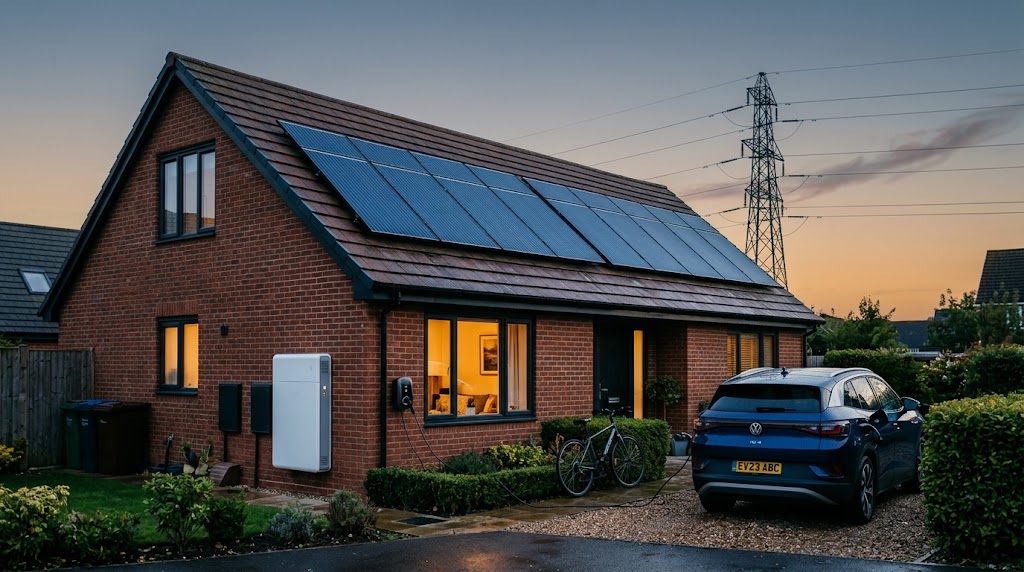
Solar panels, home batteries et Chargeurs de véhicules électriques change the equation. They let households generate their own power, store the cheapest electricity available, and use it exactly when they need it. The more you can do this, the less you rely on the wholesale market and the national grid’s problems.
That reduced reliance is the real protection against rising bills. It also opens new ways to save and even earn.
Having the hardware is only the starting point. The biggest gains come from making the system work hard: choosing the right time-of-use tariffs, programming batteries to charge when power is cheapest, and joining a virtual power plant that pays households for helping balance the grid. These steps turn a static piece of equipment into an active financial tool.
The value compounds over time. As more of a home goes electric — heating, cooking, driving — the same solar and système de batterie does more work. Savings that look modest in year one often grow as electricity use rises and grid prices continue their upward trend.
The upfront cost barrier is finally coming down
Until recently, the people who needed this technology most were often locked out by capital cost. Installation quotes looked intimidating, and the learning curve of tariffs, settings and optimisation felt steep. Without expert guidance, many households stayed on standard tariffs and accepted whatever the price cap delivered.
That is changing. New ownership and financing models are removing the large upfront barrier. When the hardware is accessible and the system is set up correctly from day one, the economics shift. Households stop being passive bill-payers and start controlling a meaningful part of their energy spend.
What can you do right now to lower energy bills UK homes are facing?
Start by understanding your current bill. Look at unit rates, standing charges and any time-of-use options available. Check whether your home is suitable for solar — most south-facing or east-west roofs can generate useful power even in the UK climate.
Then consider a battery. A well-sized system charged on cheap overnight rates or surplus solar can cover a large share of evening and morning demand, precisely when grid prices are highest. Pair that with an EV charger that follows the same cheap-rate logic, and the savings multiply.
Finally, treat the system as something that needs managing. The difference between an average installation and a high-performing one is often the quality of the setup, the tariff choice and ongoing optimisation. That is where expert support matters.
What this means for your household
Rising energy bills are not a temporary inconvenience. They are the result of structural pressures — volatile wholesale markets, growing demand, and a grid still catching up with the renewables already connected to it. Waiting for those pressures to ease is not a strategy.
Taking control of how much electricity you buy from the grid, when you buy it, and how you use it is.
Ready to see how much you could lower energy bills UK with solar, batteries and smart control? Get a free, no-obligation assessment of your home and start protecting yourself from the next price rise from a local installer. For business cooperation, Contactez-nous today.
Mots-clés: lower energy bills UK, rising UK electricity prices, UK energy price cap 2027, home battery storage UK, solar panels and batteries, reduce electricity bills, grid inefficiency UK, virtual power plant, time of use tariffs, home energy tech, Centrica energy warning, Cornwall Insight price forecast