
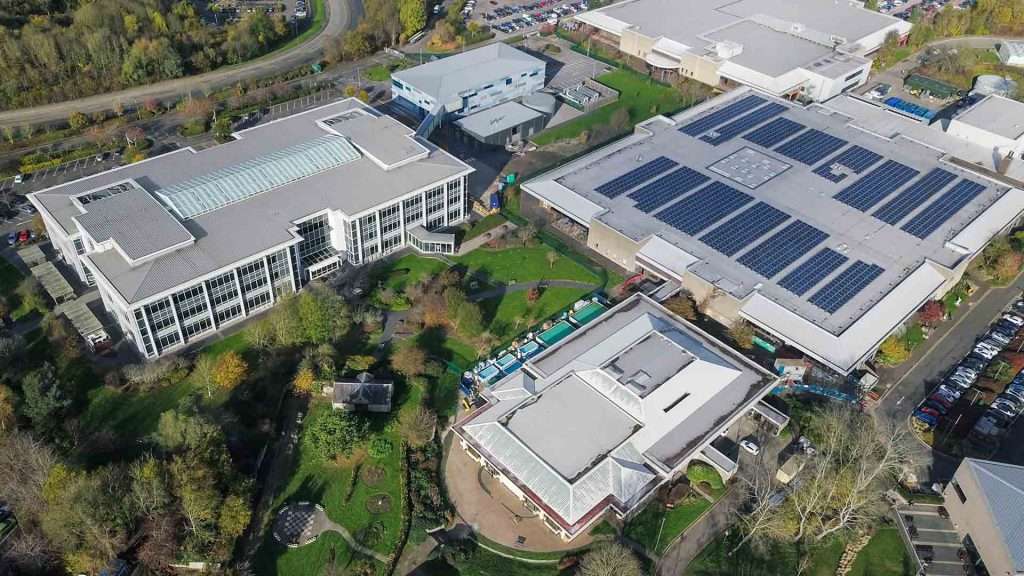
For industrial operations, a power failure isn’t an inconvenience—it’s a crisis. Production lines halt. Critical processes fail. Revenue evaporates by the minute. Recent history, from the Texas Freeze to California wildfire outages, has proven our electrical grid is more vulnerable than ever. For decades, the reflexive answer to this threat was the diesel generator. But in an era demanding resilience, sustainability, and fiscal prudence, a new standard has emerged: the industrial microgrid.
The High Cost of Grid Dependence
Today’s industrial leaders face a stark reality. Climate change and aging infrastructure are making widespread grid failures a recurring business risk. These events expose the fragility of relying solely on utility power for business continuity power. The traditional playbook—standby diesel generators—is increasingly seen as what it is: a last-century stopgap with diminishing returns in the 21st century.
The Diesel Generator’s Mounting Drawbacks
Diesel generators have served a purpose, but their shortcomings are now too significant to ignore. First is operational cost. They sit idle 99% of the time, yet require constant maintenance and expensive fuel contracts. When a crisis hits, you’re not just losing money from downtime; you’re burning cash on wildly expensive diesel to keep the lights on.
Second is reliability. A generator must start instantly after months of idleness—a notorious point of failure. Third, they are a sustainability liability. Loud, polluting, and carbon-intensive, diesel gensets clash directly with modern ESG (Environmental, Social, and Governance) mandates and corporate net-zero goals. They keep you running, but at a cost to your bottom line and your reputation.
The Modern Solution: The Solar + Storage Microgrid
This is where true industrial microgrid solutions redefine resilience. A microgrid is a localized, self-contained energy system that can operate both connected to the main grid and, critically, independently from it. The most robust configuration for industry integrates solar PV arrays with C&I battery storage, often intelligently managed by smart software.
The core superpower of this system is “islanding.” When the central grid fails, the microgrid automatically isolates—forming its own “island” of power—and continues to energize your critical facilities. This transition isn’t a loud, shuddering engine start; it’s often seamless, happening in milliseconds with no flicker to sensitive machinery.
Why Microgrids Are the Superior Choice for Continuity
The benefits extend far beyond mere backup:
Seamless & Instantaneous Transition: Advanced stockage de batterie provides power instantaneously, protecting sensitive digital infrastructure and continuous processes that a generator’s ramp-up time would disrupt.
Silent, Clean Operation: No noise pollution, no exhaust fumes, and zero on-site emissions. This allows for normal work to continue safely and aligns perfectly with ESG commitments.
Fuel Savings That Fund the Future: This is the paradigm shift. While a generator is a pure cost center, a solar-plus-storage microgrid generates economic value every single day. By offsetting utility power with solar energy and avoiding peak demand charges, the system delivers substantial, predictable savings. These ongoing savings can effectively pay for the capital investment over time, turning a resilience expense into a strategic asset.
True Grid Independence: You are no longer a passive victim of grid instability. You gain control, using your own on-site generation to ensure business continuity power on your terms. This energy security is priceless.
Beyond Backup: A Strategic Energy Asset
Using industrial microgrid solutions only as backup power misses their full potential. They are a strategic investment in energy management, cost predictability, and sustainability. They future-proof your operations against rising energy costs, tightening carbon regulations, and an unreliable grid.
The question is no longer just, “How do we back up our facility?” It’s, “How do we power our future with resilience, intelligence, and responsibility?” The era of the noisy, dirty, expensive generator is ending. The future belongs to intelligent, clean, and self-sufficient microgrids.
Ready to transform your energy resilience from a costly insurance policy into a value-driving asset? Let’s discuss a tailored microgrid solution for your industrial operation today.
Mots-clés: Industrial microgrid solutions, business continuity power, battery backup vs diesel generator, grid independence.