
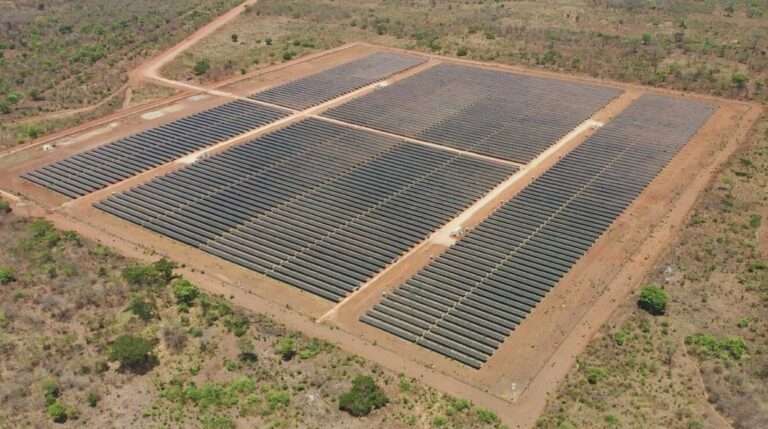
Africa’s mining industry is a cornerstone of the continent’s economy, yet it faces a persistent challenge: an unreliable and costly energy supply. Frequent power outages, high electricity costs, and dependence on fossil fuels disrupt operations and inflate expenses. Commercial and Industrial Battery Energy Storage Systems (C&I BESS) offer a transformative solution, addressing these pain points by reducing costs, enhancing reliability, and supporting sustainability.C&I BESS revolutionize energy management for Africa’s mining sector.
Key Market Trends & Drivers
Massive Investment Surge: CrossBoundary Energy secured $495M from MIGA and $45M from EAAIF/PIDG to deploy 570MWh+ of BESS across 20 African countries, targeting mining and industrial clients 210.
South Africa Leads: Ranked 8th globally (1.3 GWh installed), driven by BESIPPPP tenders (e.g., Mulilo won 4.47 GWh in bids) 6.
Hybrid Systems Dominate: Solar/wind + BESS is the standard model for mines, replacing diesel and stabilizing grids (e.g., Ergo Mining’s 54% stored solar for peak demand) 79.
Regulatory Push-Pull: While programs like BESIPPPP accelerate projects, grid access delays and single-revenue models hinder ROI 6.
Tech Innovation: JA Solar’s “BluePlanet” (2.32 MWh to Kenya) and Red Sands BESS (Northern Cape) showcase climate-resilient, high-efficiency systems 89.
The Pain Points of Africa’s Mining Energy Crisis
1. Unreliable Power Supply
Africa’s mining operations, particularly in regions like South Africa, Nigeria, and Ghana, grapple with frequent power outages and load shedding. In South Africa alone, load shedding disrupted businesses for over 1,200 hours in 2023, causing significant downtime for mines. These interruptions halt production, delay schedules, and lead to substantial revenue losses. For energy-intensive mining processes, a stable power supply is non-negotiable.
2. High Energy Costs
Mining operations consume vast amounts of electricity, making energy costs a significant portion of operational budgets. In many African countries, electricity tariffs are volatile, and peak demand charges further inflate expenses. For instance, in Nigeria, commercial electricity rates can exceed $0.15 per kWh, straining profitability. Diesel generators, often used as backups, are expensive to run and maintain, with fuel costs fluctuating unpredictably.
3. Environmental and Regulatory Pressures
The reliance on fossil fuels for power generation contributes to high greenhouse gas emissions, clashing with global sustainability goals. Mining companies face increasing pressure to comply with environmental regulations and reduce their carbon footprint. In South Africa, the carbon tax introduced in 2019 adds financial strain, pushing companies to adopt cleaner energy solutions.
4. Infrastructure Limitations
Many mining operations are located in remote areas with limited grid access, forcing reliance on costly and inefficient off-grid solutions. Even where grid connections exist, aging infrastructure often fails to meet the high energy demands of mining, leading to frequent outages and voltage instability.
The C&I BESS Solution: A Game-Changer for Mining
Commercial and Industrial Battery Energy Storage Systems (C&I BESS) are advanced energy storage solutions designed to store electricity from renewable sources or the grid, releasing it strategically to optimize costs and ensure reliability. Here’s how C&I BESS addresses the mining sector’s energy challenges:
1. Enhancing Reliability with Backup Power
C&I BESS provides a seamless backup power source, ensuring uninterrupted operations during grid outages. With fast response times (as low as 3 seconds for vanadium redox flow batteries), BESS can instantly supply power to critical mining equipment, minimizing downtime. For example, a 1 MW/4 MWh BESS can support a mine during load shedding, maintaining production continuity. In Ghana, AlphaESS delivered a 1 MW/2 MWh microgrid BESS for a shopping mall, demonstrating the technology’s reliability for high-demand applications.
2. Cutting Costs through Peak Shaving and Load Shifting
C&I BESS reduces energy costs by storing electricity during low-rate periods and discharging it during peak demand, a strategy known as peak shaving. This approach can cut energy bills by 20-30% in commercial settings, with similar savings achievable in mining. Load shifting also optimizes energy use by aligning consumption with cheaper tariff periods. In Peru, BESS systems have been used to target peak-hour pricing, delivering significant cost reductions for industrial users.
3. Soutenir l'intégration des énergies renouvelables
C&I BESS enables mines to integrate renewable energy sources like solar and wind, reducing reliance on costly diesel generators. By storing excess renewable energy, BESS ensures a steady power supply despite the intermittent nature of renewables. A South African mining study showed that a hybrid renewable energy system (HRES) combining floating solar, wind, and vanadium redox flow BESS achieved a 25% wind penetration rate and reduced greenhouse gas emissions significantly. This aligns with sustainability goals and helps mines avoid carbon taxes.
4. Overcoming Infrastructure Challenges
For remote mines, C&I BESS offers a scalable, off-grid solution. Systems like those from NextG Power, ranging from 30 kW to 30 MW, can be tailored to a mine’s specific energy needs, bypassing the limitations of weak or nonexistent grid infrastructure. The scalability of vanadium redox flow batteries, with their long cycle life (over 10,000 cycles), makes them ideal for large-scale mining applications.
5. Improving Safety and Reliability
Advancements in BESS technology have reduced failure rates by 98% from 2018 to 2024, thanks to improved designs and safety protocols. Lithium-ion and vanadium redox flow batteries offer high efficiency and durability, with the latter providing enhanced safety due to lower risks of thermal runaway. Cubenergy’s focus on safety-first battery management systems ensures reliable performance for C&I applications, giving mining operators peace of mind.
Real-World Impact: C&I BESS in Action
In South Africa, the mining sector’s energy crisis has driven a surge in BESS adoption. A 1 MW/1.08 MWh BESS paired with a solar PV system in Oyo State, Nigeria, demonstrated how C&I BESS can power high-demand facilities while reducing costs and emissions. Similarly, in South Africa, hybrid renewable energy systems using BESS have been shown to optimize energy costs and enhance reliability for mining operations, with payback periods often achieved within 5-7 years due to significant cost savings.
Why C&I BESS is the Future for Africa’s Mining Industry
The adoption of C&I BESS in Africa’s mining sector is not just a trend—it’s a necessity. By addressing unreliable power, high costs, environmental pressures, and infrastructure challenges, BESS offers a comprehensive solution that boosts operational efficiency and sustainability. With global BESS capacity projected to reach 1,200 GW by 2030, and C&I systems expected to grow to 560 GWh, the technology is poised to transform Africa’s mining energy landscape.
Key Benefits of C&I BESS for Mining:
Économies de coûts: Reduce peak demand charges and fuel costs by up to 30%.
Fiabilité: Ensure uninterrupted operations with fast-responding backup power.
Durabilité: Lower carbon emissions by integrating renewables and reducing fossil fuel use.
Évolutivité: Tailor systems to meet the unique energy demands of any mine, from small to large-scale.
Take the Next Step Toward Energy Independence
Africa’s mining industry can no longer afford to rely on outdated and unreliable energy systems. C&I BESS offers a proven, cost-effective, and sustainable solution to the energy crisis. By investing in BESS, mining companies can cut costs, boost reliability, and align with global sustainability goals.
Ready to transform your mining operations with C&I BESS? Contactez notre équipe today to conduct an energy audit and explore tailored solutions for your site.
Mots-clés: C&I BESS, Africa mining energy crisis, battery energy storage systems, cost reduction, energy reliability, renewable energy integration, peak shaving, load shedding, sustainable mining.