
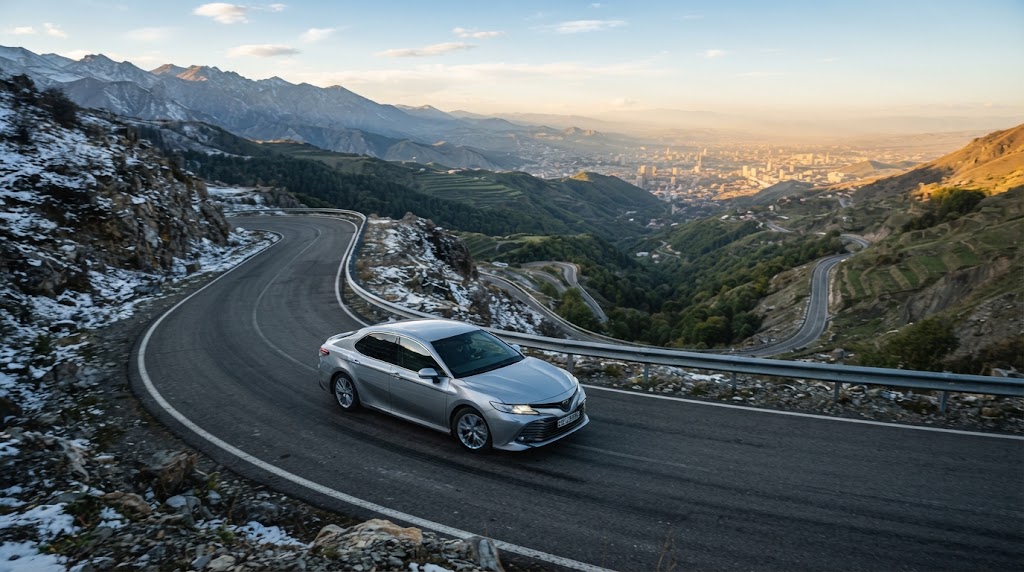
One Vehicle, Two Climates, Every Single Day Across Georgia and the Caucasus
There is no such thing as a mild week of driving in Georgia or the wider Caucasus.
A hybrid taxi can start its morning on a frozen mountain pass near Kazbegi, where overnight temperatures leave the ground hard and the air sharp. By afternoon, that same vehicle is crawling through Tbilisi traffic or sitting at a humid Black Sea port, where the pavement throws back heat for hours. Cross into Armenia or Azerbaijan and the pattern repeats, with highland routes giving way to hot, crowded lowland cities. Then it does it all again the next day.
This is the normal operating environment across Georgia and the Caucasus, and it extends into the export markets of Armenia, Azerbaijan, and Kazakhstan. It is also why so many hybrids arriving through salvage auctions in the region are already struggling. Their worn OEM packs were never built for deep cold starts, sustained regenerative loads on long descents, and prolonged exposure to high ambient heat, all within the same duty cycle.
Rebuilders in Rustavi and other Georgian and Caucasus hubs see the same pattern repeatedly: packs that lose capacity in winter, cut regeneration on mountain runs, and degrade faster once summer arrives. HEV Lithium-Ion Batteries were designed specifically to close that gap.
Mountain Descents Are Harder on Batteries Than You Think
Most battery conversations focus on cold. Across Georgia and the Caucasus, the bigger stress often comes on the way down.
Long alpine descents push the hybrid system into continuous regenerative braking. That sends a steady stream of high current back into the pack. In older nickel-metal hydride modules, that energy converts quickly into heat. Once the pack reaches its thermal limit, the system cuts regeneration entirely.
The driver loses free energy capture and switches to friction brakes. Brake wear accelerates, temperatures rise further, and efficiency drops across the rest of the route.
HEV Lithium-Ion Batteries absorb that sustained charging current without the rapid internal temperature spike that forces older packs offline. Energy recovery stays consistent from the summit to the valley floor. For fleet operators running daily mountain-to-city cycles across Georgia and the Caucasus, that translates directly into fuel savings and fewer brake jobs.
Why Legacy Chemistry Falls Short Here
Nickel-metal hydride has real limits in Georgia and across the Caucasus.
These packs lose usable capacity when mountain temperatures drop hard. They hit thermal thresholds quickly under heavy regenerative braking. In summer, high ambient heat combined with stop-start city driving pushes them even further.
Drivers notice it in predictable ways. Reduced electric assist on cold mornings. Sudden loss of regeneration on long grades. Both situations raise operating costs and shorten pack life.
Lithium-ion modules generate less internal heat under identical loads. They hold more stable performance across the full range of conditions a Georgian or Caucasus hybrid actually faces: freezing overnight parking at elevation, continuous downhill charging, and long hours in hot urban traffic. This is not a theoretical advantage. It shows up as fewer derates, more consistent power delivery, and longer service intervals.
Built to Drop Into the Factory Enclosure
For rebuilders across Georgia and the Caucasus, installation speed and reliability decide whether a product is worth stocking.
HEV Lithium-Ion Batteries fit directly into the original Toyota metal battery enclosure. They align with the factory cooling channels, so the vehicle’s existing thermal management continues working as designed. Communication with the factory Battery Management System stays seamless. No custom wiring. No software patches. No additional sensors.
That plug-and-play design keeps labor hours predictable and removes the integration risks that delay a vehicle’s return to service. Workshops handling a steady flow of hybrid imports into Georgia and the wider Caucasus can install a replacement pack in roughly the same time as a conventional unit, while delivering a solution far better suited to local conditions.
Where the Value Shows Up on Resale
A hybrid carrying a battery proven in real Georgian and Caucasus conditions is worth more when it moves to buyers in Armenia, Azerbaijan, or Kazakhstan.
Those markets know the terrain and the climate. They look for vehicles that will not leave drivers without electric assist on cold mountain roads, or force an early pack replacement after a couple of hot summers.
Exporters moving inventory through Georgia and the Caucasus who can document that a vehicle carries HEV Lithium-Ion Batteries separate their stock from the rest. Taxi fleets and commercial operators also prefer packs that deliver stable year-round performance instead of forcing a compromise between winter mountain routes and summer city work. The higher upfront cost of a quality lithium-ion solution is typically recovered through longer service life, stronger residual value, and fewer unplanned downtime events.
Matched to the Way These Vehicles Actually Work
Georgian and Caucasus hybrids do not operate in controlled conditions. They climb, descend, idle in traffic, sit overnight in the cold, then bake under summer sun. Any battery sold into this market has to handle that entire set of stresses without constant derating or premature failure.
HEV Lithium-Ion Batteries were developed around these exact duty cycles. They accept regenerative energy on long mountain runs, deliver reliable power after cold soaks, and keep working as ambient temperatures climb and traffic density increases.
For rebuilders, the choice is practical. A battery that fits the original enclosure, works with the factory management system, and survives the region’s real operating extremes reduces warranty exposure and protects reputation. For fleet managers, it means more predictable costs and higher vehicle availability. For exporters, it means stronger offers from buyers who have already lived through the shortcomings of aging OEM packs.
Alpine freezes, heavy regenerative braking on long descents, and high-temperature summer fleet cycles are not going away. Vehicles that move between these conditions every week need batteries engineered for the full range of demands, not packs that were merely adequate in milder climates.
Build confidence into every export and taxi fleet across Georgia and the Caucasus. Choose HEV Lithium-Ion Batteries engineered for the harshest all-season routes in the region. Skontaktuj się z nami today for a upgrade solution to the old NiMH batteries.
Słowa kluczowe: HEV Lithium-Ion Batteries, Georgia hybrid battery, Caucasus hybrid batteries, Georgia and Caucasus hybrid battery, Georgia hybrid battery rebuild, Caucasus hybrid battery rebuild, regenerative braking heat management, Toyota hybrid battery replacement, Rustavi hybrid rebuilders, all-season hybrid battery, alpine freeze battery performance, mountain descent battery, high temperature fleet battery, Tbilisi hybrid battery, Armenia hybrid battery, Azerbaijan hybrid battery, Kazakhstan hybrid battery