
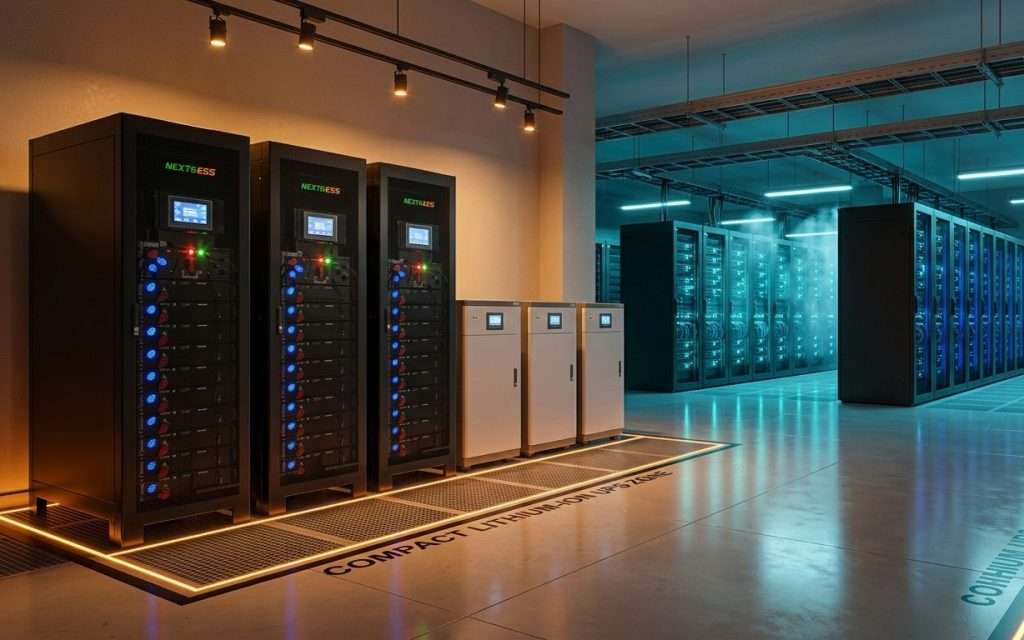
From UPS to SST: The Data Center Power Architecture Revolution
The Power Architecture Shake-Up No One Saw Coming
For decades, the uninterruptible power supply (UPS) was the undisputed backbone of data center electrical infrastructure. It was reliable, well-understood, and trusted. But AI has changed everything.
Data center power architecture is undergoing its most significant transformation in a generation. The trajectory is clear: UPS → HVDC → SST, with 800V high-voltage direct current (HVDC) and solid-state transformers (SST) emerging as the new industry standard.
What’s driving this shift? Simple physics. AI servers now consume 132 kW per rack—up to 900 kW for next-generation Rubin systems—and traditional UPS-based AC distribution simply cannot keep up. As NVIDIA’s GPU TDP climbs past 4,000W, the industry needs fundamentally different power delivery architecture.
Why Traditional UPS Is Struggling
The limitations of traditional UPS architecture in the AI era are becoming impossible to ignore:
Efficiency Gap: Traditional UPS systems achieve 90-92% efficiency at best. By contrast, HVDC and SST data center power systems reach 98-99% efficiency. For a 1GW data center consuming 9 billion kWh annually, every percentage point of efficiency represents tens of millions of dollars in electricity costs.
Space Constraints: To support MW-class AI racks with traditional UPS, data centers require massive battery rooms and cooling infrastructure—directly conflicting with the industry’s drive for maximum compute density.
Response Speed: Traditional UPS architectures, designed for 5-10 kW racks, cannot respond quickly enough to the power fluctuations of AI workloads where GPU power draw can swing dramatically within milliseconds.
AC to DC Transition: The entire industry is moving from AC to DC distribution. NVIDIA has explicitly endorsed 800V HVDC architecture and is working with leading partners to develop SST-based solutions to support future Rubin Ultra systems.
The New Contenders: HVDC and SST
HVDC: The Near-Term Solution
High-voltage direct current (HVDC) eliminates the multiple AC-to-DC conversion stages that waste energy in traditional UPS systems. Instead of converting from AC to DC and back again, HVDC delivers 800V DC directly to the rack.
The market is moving fast. Domestic Chinese data centers have been deploying 240V and 336V HVDC for years, while the global market is leapfrogging directly to 800V to support NVIDIA’s Rubin platform—expected to be the primary beneficiary of this architecture starting in 2027.
Morgan Stanley projects that power solution value per AI server rack will increase more than 10x by 2027 compared to current GB200 systems, driven by the transition to HVDC and higher-density architectures.
SST: The Ultimate Destination
Solid-state transformers (SST) represent the final frontier of data center power architecture. SST eliminates the bulky, inefficient 60Hz transformer, converting 13.8-35kV AC directly to 800V DC in a single step—achieving ~98% efficiency while dramatically reducing footprint.
SST data center power delivers what traditional architectures cannot:
| Korzyść | SST Advantage |
|---|---|
| Efektywność | ~98% vs. 90-92% for traditional UPS |
| Ślad stopy | 50-70% smaller vs. traditional transformer + UPS |
| Response Time | Instantaneous response to load changes (microsecond-level) |
| Power Flow | Bidirectional, enabling energy storage and grid services |
According to industry forecasts:
| Year | Milestone |
|---|---|
| 2026-2027 | Key SST sampling and order conversion window; major suppliers ramping up |
| 2027-2028 | First commercial deployments; NVIDIA Rubin Ultra systems target 800V HVDC with SST |
| 2028-2029 | HVDC and 10+kV SST applications accelerate |
| 2030 | 5-10MW, 30+kV SST expected to become mainstream |
Major players have already committed:
| Company | SST Activity |
|---|---|
| Delta Electronics | SST products already testing at major cloud service providers |
| Eaton | Launched 800V DC products with multiple pilot projects |
| Schneider Electric | Unveiled 800VDC “Sidecar” power module at Computex 2026, targeting 2027 production |
| Vertiv | Plan to release 800VDC power products in H2 2026 to support NVIDIA’s rack-scale platforms |
| Huawei, Sungrow, TBEA | Active SST development programs |
| Zhicheng, Inovance, Zhongdian Transformer, Tereed | Entering SST market |
The Market Impact
The scale of this transformation is enormous. By 2030:
| Market | Projected Value |
|---|---|
| Global HVDC Market | Exceeds $22 billion |
| Global SST Market | Exceeds $14 billion |
| Data Center Infrastructure Investment | At least $3 trillion globally |
The UPS market, while still growing, is shifting. MarketsandMarkets projects global data center UPS market from $8.76 billion in 2025 to $12.47 billion in 2030, but this growth masks a fundamental shift: UPS is evolving into a “power middleware” that integrates with HVDC and SST architectures.
What This Means for Data Center Operators
If you’re planning new data center capacity today, the architecture decisions you make now will determine your competitive position for the next decade:
| Scenario | Zalecenie |
|---|---|
| New Builds (Hyperscale) | Consider skipping traditional UPS entirely. Design for 800V HVDC with SST compatibility. The efficiency gains and space savings are too significant to ignore. |
| New Builds (Colocation) | UPS remains relevant but prepare for HVDC-ready architecture to accommodate AI tenants |
| Brownfield Upgrades | Evaluate feasibility of high-density power distribution retrofits. Retrofitting to 40kW density costs $50,000-100,000 per rack; building new 100kW-capable infrastructure costs $200,000-300,000 per rack |
| AI-Focused Facilities | 800V HVDC + SST is the recommended path—NVIDIA’s Rubin platform (2027+) will require this architecture |
The UPS Evolution: Not Dead, Just Different
UPS isn’t disappearing—it’s evolving. According to industry analysis, UPS will remain relevant through 2030, but its role is transforming:
| Year | UPS Market Share | Role |
|---|---|---|
| 2025 | Dominant (51-62% of battery structure) | Primary backup for data centers |
| 2027 | Declining (~20-25% of battery structure) | Supplemented by large-scale storage and BBU |
| 2030 | Niche (~8% of battery structure) | Specialized applications within HVDC/SST architectures |
The survivors will be UPS vendors who embrace:
High-density modular designs (200kW+ modules)
Integration with HVDC and SST systems
Lithium-ion and sodium-ion battery compatibility
Energy storage and grid services capabilities
The Role of NextG Power
As the industry transitions from UPS to HVDC to SST, NextG Power is uniquely positioned to help data center operators navigate this complex landscape. Our integrated energy infrastructure solutions:
Seamlessly integrate with next-generation HVDC and SST architectures
Provide the magazynowanie baterii and microgrid controls needed for hybrid deployments
Deliver firm, reliable power while enabling the efficiency gains of new architectures
Offer expert guidance on technology selection and implementation timing
Whether you’re planning for SST data center power today or building a bridge with advanced UPS solutions, NextG Power delivers the expertise and resources to ensure your energy infrastructure aligns with your business goals.
Case Study: Industry’s First SST Commercial Deployment
In July 2026, the industry’s first commercial SST project was deployed at Qinhuai Data’s Huanshoushan·Sangyuan Cloud Computing Industrial Base. This landmark project demonstrates:
| Metric | Wynik |
|---|---|
| Conversion | Direct 10kV AC to 800V DC, eliminating traditional transformers and UPS |
| Space Reduction | 50%+ reduction in power distribution infrastructure footprint |
| Efektywność | 98%+ end-to-end efficiency from utility to server rack |
| Status | Successful commercialization of SST technology in production environment |
This project, developed in collaboration with Delta Electronics and Meituan, marks the beginning of the SST data center power era. Over 40 companies have now entered the SST space, including Delta, Eaton, Vertiv, Schneider Electric, Huawei, Sungrow, and many others.
The Economics of SST Adoption
The financial case for SST is compelling:
| Metric | Traditional UPS | SST Architecture | Savings |
|---|---|---|---|
| Efektywność | 90-92% | 98-99% | 6-9 percentage points |
| Annual Energy Cost (1GW) | ~$330 million | ~$310 million | ~$20 million |
| Space Required | ~1,500 sq ft | ~450 sq ft | 70% reduction |
| Cooling Load | Higher | Lower | Additional savings |
For a 1GW data center operating at $0.04/kWh, every 1% efficiency improvement saves approximately **$40 million annually**.
The Architecture Is Changing—Don’t Get Left Behind
Ten data center power architecture revolution is underway. Traditional UPS served the industry well for decades, but the AI era demands more: higher efficiency, greater density, faster response, and radical space savings.
SST data center power represents the ultimate destination—delivering 98%+ efficiency, 70% smaller footprint, and instant response to AI load fluctuations. But the journey begins with smart decisions today:
Design for 800V HVDC as the baseline for new facilities
Include SST readiness in your infrastructure specifications
Partner with vendors who are actively developing next-generation solutions
Plan for the transition—whether you adopt SST now or in 3-5 years
Whether you choose 800V HVDC today or wait for SST to mature, one thing is certain: your next data center will not be powered the way your last one was.
Ready to future-proof your data center power architecture? Skontaktuj się z NextG Power today to discuss your technology roadmap and discover how our integrated energy solutions can support your transition to next-generation power delivery.
Słowa kluczowe: SST data center power, UPS vs HVDC, solid-state transformer data center, 800V HVDC, data center power architecture, AI data center power, UPS to SST transition, data center HVDC market, NVIDIA Rubin power, data center power infrastructure, NextG Power, high-density rack power, AI server power consumption, data center energy efficiency, data center power revolution