
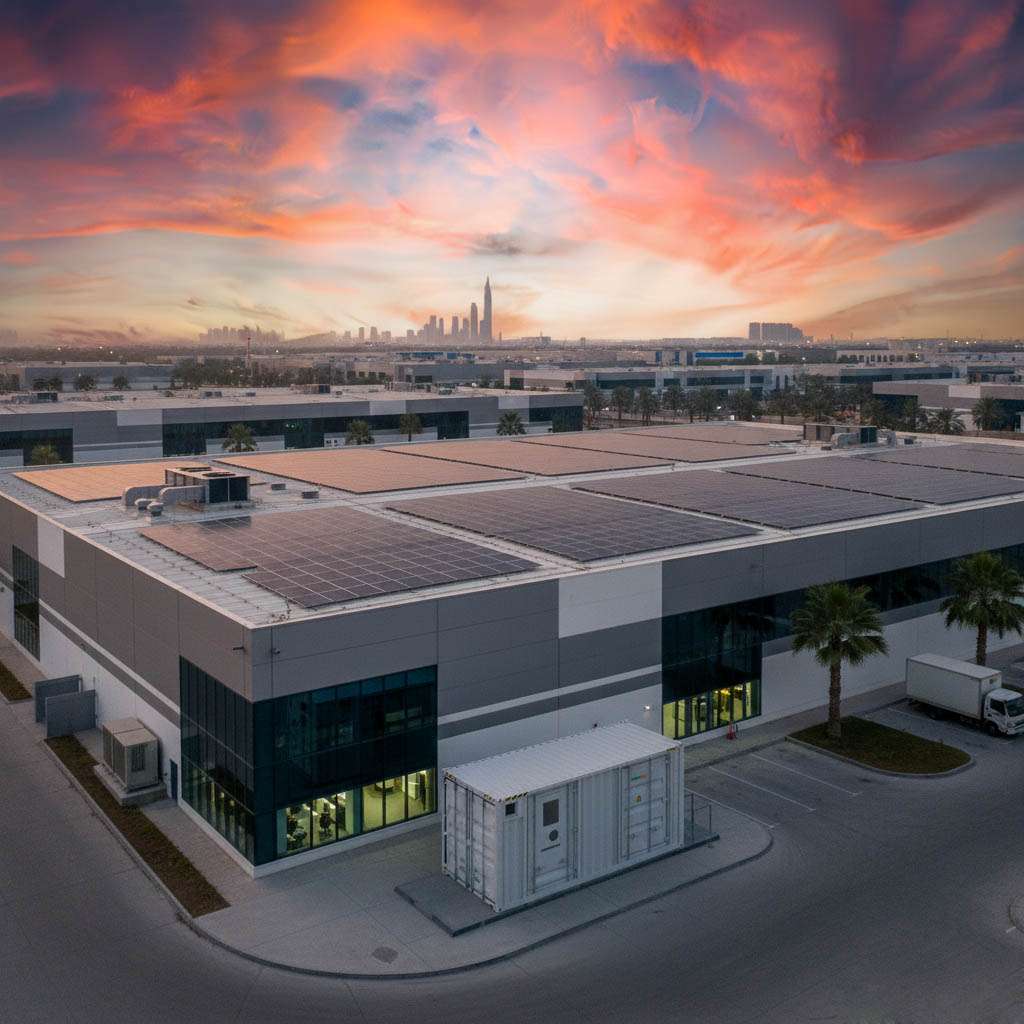
The Middle East’s rooftop solar revolution is facing a predictable yet frustrating challenge: the sun sets just as your energy needs peak. You’re generating a surplus at noon but buying power back from the grid by evening. This mismatch isn’t just inconvenient; it limits your savings and keeps you dependent. The solution that’s redefining energy independence across the region is the powerful combination of solar + storage.
This combo is more than an upgrade—it’s the essential pairing that transforms a solar installation from a partial fix into a comprehensive, resilient, and economically superior power solution.
The Fundamental Flaw of Solar-Only Systems
Solar panels on a Middle Eastern roof are incredibly productive, but their output curve is out of sync with modern life. Residential demand soars in the evenings for cooling, lighting, and appliances. Commercial operations, like warehouses or factories, often run late shifts.
Without storage, this cycle forces you to participate in a one-sided exchange with the utility grid:
You export your excess solar energy at a relatively low feed-in tariff or for credit.
You import expensive grid power during peak evening hours.
This keeps your “solar self-consumption rate” low, meaning you use only a fraction of the clean energy you produce. True independence remains out of reach.
Storage: The Intelligent Energy Buffer
Adicionando um sistema de armazenamento de bateria changes the entire game. Think of it as a sophisticated energy reserve tank for your property. Your solar + storage system intelligently manages power flow:
Daytime: Solar powers your property first. Any excess, instead of being exported immediately, charges your battery.
Evening/Night: Your home or business seamlessly switches to drawing clean, free power from the fully charged battery.
Grid Interaction: You only import from the grid once your battery is depleted, dramatically reducing your consumption.
This technological bridge turns your solar array into a 24/7 power source, increasing self-consumption rates from around 30-40% to 70%, 80%, or even higher.
Policy Foundations: Net Metering and Beyond
Progressive policies in the region have laid the groundwork. The UAE’s DEWA Shams Dubai and Saudi Arabia’s Net Metering Program allow for grid connection and credit for exported energy. These schemes make solar viable.
No entanto, solar + storage strategies optimize within these policies. Why export all your surplus for credit when you can store it and use it directly, avoiding the higher-cost power you’d later buy back? Storage allows you to play the energy market on your terms, using the grid as a backup, not a crutch.
The Compelling Economics of the Dream Team
The upfront cost of a battery is a key consideration, but the long-term financial picture is compelling. A solar + storage system delivers enhanced value:
Maximized Solar Investment: You use more of the energy you produce.
Peak Shaving: Avoid drawing power during the utility’s most expensive peak tariff periods.
Future-Proofing: Protects against rising electricity prices and evolving net metering rates.
Increased Resilience: Provides backup power during grid outages, a value that’s hard to quantify but critical for many businesses.
While the payback period may be slightly longer than solar-only, the total lifetime savings and value are significantly greater, offering a stronger, more robust return on investment.
Case Study: 80% Independence for a Dubai Warehouse
A concrete example brings this to life. A large logistics warehouse in Dubai installed a sizable rooftop solar array. Despite high daytime generation, its energy costs remained steep due to nighttime sorting and loading operations.
By integrating a tailored solar + storage solution, the facility now stores its afternoon solar peak. This reserve powers its critical evening operations. The result? The site has achieved approximately 80% energy self-sufficiency, radically cut its demand charges, and gained predictable operational costs. This isn’t a theoretical model; it’s today’s reality for forward-thinking businesses.
From Partial Solution to Total Control
The era of simple solar generation is evolving. For homeowners and businesses in the Middle East seeking true autonomy, lower long-term costs, and resilience, the integrated path is clear. Solar + storage in Middle East is not just an option; it is the definitive strategy for unlocking the full potential of the sun, turning your property into a self-reliant energy asset.
Keywords: Solar + Storage Middle East, rooftop solar Middle East, solar battery storage UAE, solar self-consumption, net metering Dubai, net metering Saudi Arabia, DEWA Shams Dubai, energy independence, solar ROI, commercial solar case study Dubai