
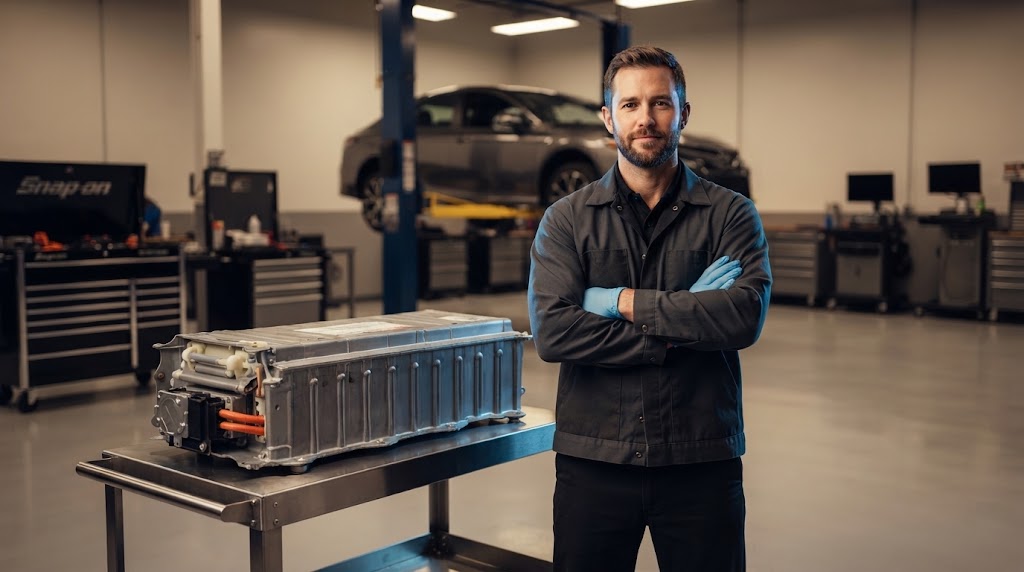
Every hybrid specialist knows the sinking feeling. A customer rolls in with a P0A80 code. You pull the pack, crack it open, test all 28 modules, find a couple of weak NiMH cells, swap them with the best used modules you can source, balance everything, and send the car out the door.
The customer is happy. You book the labor. Life is good — for about eight weeks.
Then the phone rings. Two different 15-year-old cells have failed. The customer is angry. Your reputation takes a hit. Warranty labor eats the original profit margin. And you’re right back under the same car doing the same temporary repair.
This is the daily reality of NiMH rebuilding. It’s cell Whack-a-Mole, and more workshops are finally deciding they’ve had enough. That’s why a growing number of professional shops are standardizing on drop-in Lithium-Ion packs — turning a high-risk, low-margin job into a clean, one-hour profit center.
The Real Cost of the Old Way
NiMH hybrid packs were never designed to last the life of the vehicle. After 10–15 years and 150,000+ miles, individual cells drift in capacity and internal resistance. The classic repair approach feels responsible: test modules, replace the weakest ones with salvage cells, rebalance. In practice, it’s a band-aid.
Here’s why:
Every used cell is already aging. Capacity is uneven. Internal resistance varies.
Corrosion has already started. Leaking potassium hydroxide (KOH) eats copper busbars. You can clean it, but the chemistry is still old.
The next failure is loading. Within months, another cell drops out, the system throws another code, and the customer returns.
The labor math is ugly. A thorough rebuild easily consumes four to six hours once you include disassembly, testing, cleaning, balancing, and reassembly. When the car comes back under warranty, that time is pure cost. Reputation damage is harder to quantify — but word spreads fast in hybrid owner communities.
The Clean Alternative: True Drop-in Lithium-Ion Packs
NextG Power drop-in Lithium-Ion packs solve the problem at the root.
100% brand-new, factory-matched cells. Uniform capacity. Consistent internal resistance across the entire pack. No guessing, no salvaging, no hoping.
No liquid electrolyte. The corrosive KOH mess that eats busbars and trays simply doesn’t exist with Lithium-Ion chemistry.
Factory fitment. Engineered to slide directly into the OEM Toyota sheet-metal battery tray using original mounting bolts. No custom brackets. No structural modifications.
Seamless Communication With the Stock System
One of the biggest fears shops have about aftermarket upgrades is electronics. Will it talk to the factory Battery Management System? Will it throw codes? Will it need spliced harnesses, bypass modules, or ECU re-flashing?
With properly engineered drop-in Lithium-Ion packs, the answer is no. Built-in smart module communication interfaces directly with the stock Toyota BMS. No wiring hacks. No external boxes. No software changes. The vehicle sees a healthy, responsive battery pack. Test drives stay clean. Check-engine lights stay off.
How the Numbers Change for Your Shop
The labor transformation is dramatic. What used to be a full-day cell-balancing project becomes a straightforward 60-minute bolt-in replacement. Pull the old pack, drop the new one in, reconnect the high-voltage connectors and communication lines, button everything up. Most experienced techs finish well under an hour after a couple of installations.
Comebacks essentially disappear. You’re no longer selling a temporary patch made from used parts — you’re delivering a genuine technology upgrade. Customers understand the difference and pay a premium for it.
Higher ticket value + dramatically lower labor hours + near-zero warranty returns = a healthier margin on every hybrid battery job.
Shops that make the switch also change their market positioning. Instead of being the place that “rebuilds hybrid batteries,” they become the shop that modernizes them. That distinction attracts more wholesale referrals, more dealer work, and more owners who want the long-term solution rather than the cheapest short-term fix.
Technical and Business Reality Check
Some technicians still prefer the familiarity of NiMH chemistry. But the industry has moved on. Lithium-Ion energy density, cycle life, and consistency outperform aging NiMH modules. When the replacement is designed as a true drop-in with proper BMS communication, the technical risk is lower — not higher — than continuing to harvest and reuse 15-year-old cells.
From a pure business standpoint, the math is even clearer. Labor is the most expensive and least scalable part of the old process. Drop-in Lithium-Ion packs remove most of that labor, eliminate warranty exposure, and raise the average repair order.
Making the Transition
Workshops that have already standardized on these packs report the same pattern:
The first few installations feel almost too simple after years of cell-level work.
The phone stops ringing with comeback complaints.
The appointment book fills with customers who heard about the “one-hour lithium upgrade.”
The shift from low-margin repair garage to advanced hybrid modernization center happens faster than most owners expect.
If your shop is still spending days balancing aging NiMH modules and absorbing the cost of inevitable returns, it’s time to evaluate the alternative. Drop-in Lithium-Ion packs are no longer experimental — they’re a proven way to protect your reputation, reclaim your labor hours, and deliver a result customers actually want to pay for.
Upgrade your shop from a low-margin repair garage to an advanced hybrid modernization center. Entre em contato com a NextG Power today for installer pricing, dealer onboarding, and wholesale availability.
Keywords: drop-in Lithium-Ion packs, NextG Power Lithium-Ion, hybrid battery replacement, NiMH cell swap, P0A80 code, Toyota hybrid battery, Lithium-Ion hybrid packs, workshop profitability, hybrid battery upgrade, drop-in Li-Ion packs, NextG Power, hybrid modernization, BMS communication, hybrid battery labor, NiMH rebuilding