
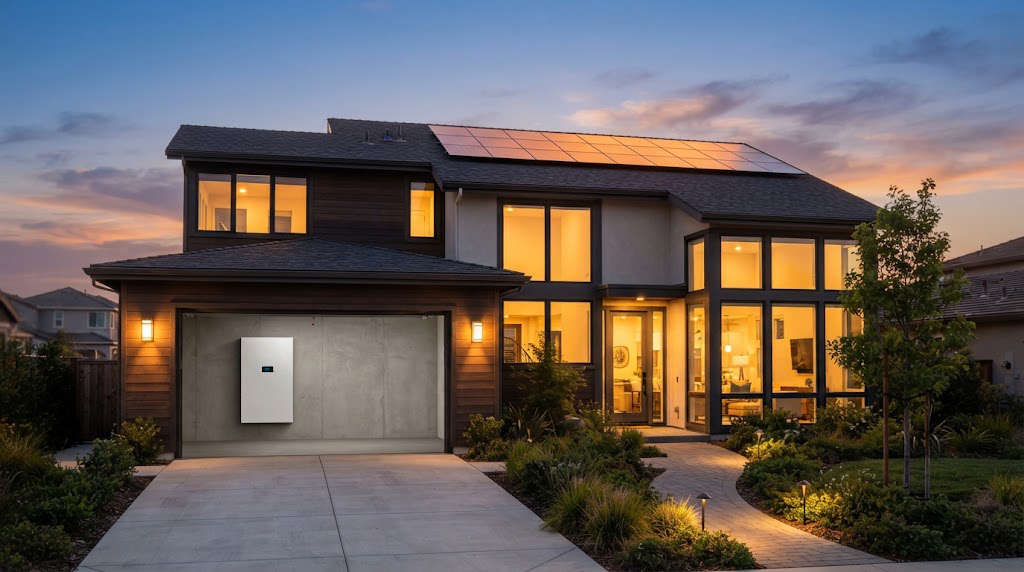
Solar panels on your roof are a strong first step toward cleaner, cheaper electricity. But without a way to hold onto the power they produce, much of it slips away—exported to the grid for minimal return or simply wasted. Solar batteries solve that problem. They capture the surplus your panels generate and keep it ready for the moments you actually need it: after sunset, during peak rate hours, or when the grid fails.
Think of solar batteries as the missing piece that turns a solar system into a genuinely independent energy setup. You generate power during the day, store what you don’t use, and draw on it later. The payoff is lower utility bills, a smaller carbon footprint, and real protection when the power goes out for everyone else on your block.
What Solar Batteries Actually Do
A solar battery is a home energy storage unit that captures electricity from your panels instead of letting it leave your property. Most households use the least electricity in the middle of the day—precisely when solar panels produce the most. Without storage, that surplus is exported or lost. With a battery, it stays on-site.
When evening arrives or clouds roll in, your home pulls from stored energy first. Modern units are compact, wall-mounted or floor-standing, and connect to your existing inverter and electrical panel. They operate quietly in the background, automatically charging and discharging based on your home’s needs and, in many cases, your utility’s rate schedule.
How the System Works
The process is simple and largely hands-off:
Your panels produce electricity while the sun shines.
Your home uses what it needs in real time.
Leftover clean energy flows into the battery rather than the grid.
When demand rises—after dark, during a heat wave, or in a blackout—the battery supplies your lights, appliances, and electronics.
Many systems include smart software that learns your usage patterns and shifts energy based on time-of-use rates, charging when power is cheap and discharging when rates climb. You don’t have to monitor it. It manages your energy for you.
The Advantages of Adding Storage
Genuine Energy Independence
Solar batteries reduce your reliance on the utility for daily power. You can cover a large share—or all—of your household needs with electricity generated on your own roof. That independence matters most during peak evening hours, when the grid is strained and rates are highest.
Clean Energy Around the Clock
Utilities still generate most electricity from fossil fuels. When you store solar power and use it later, you avoid drawing that dirtier grid mix. Your home runs on renewable energy day and night, cutting your carbon footprint without changing how you live.
Reliable Backup Power and Outage Protection
Outages happen—storms, equipment failures, wildfire safety shutoffs. A backup battery keeps essential circuits running: refrigerators, lights, Wi-Fi, medical devices. In regions where multi-day outages are common, this capability alone justifies the investment. You stay powered while neighbors wait for crews.
Lower Bills and Control Over Savings
Savings come from two directions. First, you use more of your own generation instead of buying from the utility. Second, in areas with time-of-use pricing, the battery supplies energy during expensive peak periods and recharges when rates are low. Even without full retail net metering, storage helps you capture more value from every panel. Those avoided charges add up over time.
Protect Your Home and Keep Appliances Running
You decide which circuits matter most—kitchen, home office, security system—and the battery prioritizes them. That control means fewer spoiled groceries, uninterrupted remote work, and peace of mind during severe weather. For many families, whole home backup is the goal; for others, protecting critical loads is enough.
Who Benefits Most
Homeowners with existing solar systems see immediate gains because their panels already produce surplus midday energy. New installations that include storage from the start often qualify for incentives and deliver higher long-term value. People in areas with frequent outages, high time-of-use rates, or limited net metering tend to see the fastest payback. Families who want cleaner energy and greater resilience rank high among adopters too.
What to Consider Before Installing
Capacity is measured in kilowatt-hours. A smaller unit might cover evening lighting and a few appliances; a larger bank can power the whole house for many hours. Start by reviewing your daily usage and critical loads, then choose a system that matches those needs with room to grow. Compatibility with your existing equipment, local permitting rules, and available incentives all shape the final decision. Maintenance is minimal—modern lithium-based batteries need little beyond occasional software updates and a clean, temperature-controlled location, with warranties commonly covering ten years or more.
The Bigger Picture
Solar batteries change the relationship between your home and the utility. Instead of consuming power only when the grid decides to sell it, you produce, store, and manage your energy on your own schedule. That flexibility reduces bills, lowers emissions, and protects your household when the unexpected happens. As utility rates climb and extreme weather becomes more frequent, on-site storage only becomes more valuable.
Ready to stop sending free energy back to the grid and start using it on your terms? Reach out today for a free assessment and find out exactly which solar batteries fit your home, your budget, and your backup goals.
Keywords: solar batteries, home solar batteries, solar battery storage, solar energy storage, backup battery, backup power, outage protection, power your home, clean energy, keep appliances running, control your savings, protect your home, manage your energy, energy independence, time-of-use rates, net metering, renewable energy, solar panel battery, whole home backup, reduce carbon footprint