
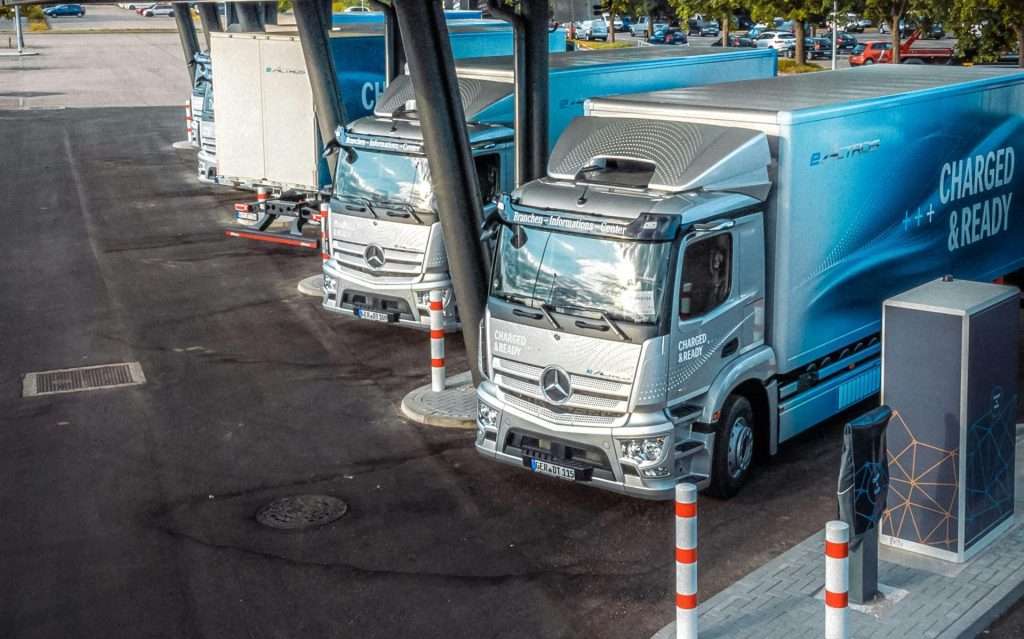
Fleet electrification is transforming commercial operations, offering significant savings and sustainability benefits. However, challenges like high upfront costs, charging infrastructure, and operational adjustments can complicate the transition. With strategic planning, fleet managers can overcome these barriers, streamline operations, and maximize return on investment (ROI). Here’s how to address the top hurdles to electrifying your fleet.
Mitigating High Upfront Costs
Electric vehicles (EVs) have higher initial costs than internal combustion engine (ICE) vehicles, with electric trucks averaging 15% more and SUVs up to 50% more. However, the Total Cost of Ownership (TCO) favors EVs, with savings of 7.8 cents per mile and 50% lower maintenance costs compared to ICE vehicles in 2025.
Strategies to Offset Costs:
Federal Incentives: Claim the Commercial Clean Vehicle Credit, offering 30% of an EV’s cost (up to $7,500 for vehicles under 14,000 lbs or $40,000 for heavier EVs).
State and Utility Rebates: Stack incentives from states like California or utilities like PG&E, which offer up to $10,000 per charger in 2025.
Gradual Transition: Start with a pilot program, electrifying select routes, or replace aging ICE vehicles incrementally.
Leasing Options: Over 60% of dealerships now offer commercial EV leasing, ideal for testing models like the Ford E-Transit or Rivian EDV without large upfront investments.
Building Cost-Effective Charging Infrastructure
Reliable charging is critical for EV fleets, but public stations often fall short for commercial needs. Building your own infrastructure requires balancing cost and scalability.
Key Approaches:
Decentralized At-Home Charging: Equip drivers with Level 2 chargers (240V, 4–8 hours to full charge) at home, reimbursing energy costs. This avoids expensive electrical upgrades and supports 40% of U.S. fleets using at-home charging in 2025.
Centralized Hubs: Start with a 1:3 charger-to-vehicle ratio, adding DC Fast Chargers (20–60 minutes to 80% charge) as demand grows. Costs for a Level 2 hub average $15,000 per station, while DC Fast Chargers range from $50,000–$100,000.
Incentives: Claim the Alternative Fuel Vehicle Refueling Property Credit (up to $100,000 per station) and state-specific rebates to reduce costs.
Utility Partnerships: Secure discounted EV charging rates or time-of-use (TOU) plans, saving 5–10 cents per kWh during off-peak hours.
Scalability Tip: Begin with Level 2 chargers and upgrade to DC Fast Chargers as your fleet grows, leveraging AI-driven load management to optimize energy use.
Optimizing Maintenance and Installation
Proper installation and maintenance are crucial to minimize downtime and ensure reliability.
Certified Installers: Work with electricians certified in EVSE (Electric Vehicle Supply Equipment) to meet 2025 National Electrical Code (NEC) standards. Quality installation prevents 70% of charger failures, often caused by wiring issues.
Proactive Maintenance: Use real-time monitoring to detect connectivity issues, which account for 65% of station downtime. AI-driven analytics predict failures, reducing repair costs by 25%.
Partnerships: Collaborate with local municipalities or businesses to share charging infrastructure, cutting costs by 15–20%.
Calculating Total Cost of Ownership (TCO)
EV fleets have a unique TCO, with higher upfront costs offset by long-term savings. In 2025, EV fleets save $2,000–$3,000 per vehicle annually on fuel and maintenance.
Steps to Assess TCO:
Pilot Programs: Electrify 5–10% of your fleet to collect data on charging costs, energy use, and driver behavior. In 2024, pilot programs helped 30% of fleets refine electrification strategies.
Utility Collaboration: Negotiate TOU rates or grid upgrades with utilities to stabilize costs. For example, California’s utilities offer EV-specific rates saving up to 12% on electricity.
Holistic Benefits: Factor in brand reputation, driver satisfaction, and compliance with 2025 emissions regulations, adopted by 20 states.
Adapting Operations for EVs
Electrification requires operational shifts to maximize efficiency.
Driver Training: Train drivers on EV operation and charging protocols. In 2025, 80% of fleet managers report improved performance after training programs.
Advanced Telematics: EVs’ sensors enable real-time monitoring, route optimization, and predictive maintenance. Fleets using telematics reduced operational costs by 10% in 2024.
Process Updates: Adjust maintenance schedules and daily inspections to align with EV needs, leveraging software for smart charging during low-rate periods.
Partner with NextG Power for Seamless Electrification
NextG Power simplifies fleet electrification with professional solutions to ensure your fleet thrives in electric future.
Contact NextG Power to overcome electrification barriers and drive sustainable, cost-effective operations.