
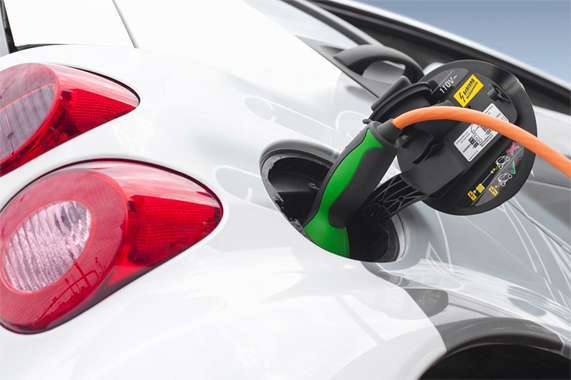
Close your eyes and picture it: your electric vehicle (EV) glides into your driveway, ready for a charge. Above, your home’s solar panels soak up the sun’s rays, funneling that energy into a battery storage system that powers your AC charger whenever you need it. No skyrocketing utility bills, no grid dependency—just pure, homegrown sunshine fueling your ride. This is the power of charging your EV with a home solar installation in 2025. With EV sales hitting 17 million globally (per the International Energy Agency) and solar adoption surging 20% annually, this setup is transforming how we drive. Here’s how it works and why it’s a game-changer, straight from energy experts and NextG Power.
The Solar-Powered EV Revolution
Your home’s solar system is your EV’s ultimate fuel source. In 2024, 1.5 million U.S. homes had solar panels, and 20% of EV owners charged their vehicles using home solar, per the Solar Energy Industries Association (SEIA). By 2030, EVs are projected to make up 45% of car sales, per the U.S. Bureau of Labor Statistics. Pairing them with a home solar setup isn’t just smart—it’s the future.
Why does it resonate? Your solar panels capture sunlight, store it in a battery, and deliver it to your EV’s AC charger on demand, slashing costs and emissions. “It’s like bottling sunlight for your car,” says Dr. Elena Martinez, a renewable energy expert. “Your home solar system powers your EV, day or night, with clean energy.”
Keywords: home solar EV charging, rooftop solar charging
The Setup: Solar to Battery to EV
Charging your EV with your home’s solar installation is seamless with the right components. Here’s how it comes together:
Solar Panels: A 6–10 kW system generates electricity from sunlight for your home use. A 3KW or more system powers most EVs for daily needs.
Battery Storage: Systems like the Tesla Powerwall or NextG Power battery store solar energy, ensuring your EV can charge at night, on cloudy days, or whenever you plug in.
Hybrid Inverter: This device converts solar panels’ DC output to AC, powering your home and feeding your AC EV charger with stored or real-time solar energy.
AC EV Charger: A Level 2 charger (240V, 25–40 miles of range per hour) draws AC power from the hybrid inverter, delivering reliable charging directly from your home’s solar system.
The process is elegant: solar panels generate power, the hybrid inverter manages the flow, and the battery stores excess energy to charge your EV’s AC charger whenever needed. “The hybrid inverter is the brain,” says Martinez. “It ensures your solar energy is always ready for your EV, no grid required.”
Keywords: solar EV charging setup, AC EV charger, hybrid inverter solar
Why Home Solar Charging Shines
Save Thousands on Fuel
Your home’s solar system turns sunlight into free EV fuel. With solar costs at $2.50–$3.50 per watt in 2025 and 30% tax credits from the Inflation Reduction Act, systems pay off in 5–8 years, per the U.S. Department of Energy. After that, charging your EV costs nearly nothing for 25–30 years. Compared to grid rates ($0.15–$0.50/kWh), solar charging saves $1,000–$2,000 annually for the average EV driver.
Charge Through Any Storm
Grid outages, like those from 2024’s record storms, don’t stop a solar-powered home. With battery storage, your EV charges directly from your home’s solar energy, rain or shine. In 2025, 25% of U.S. EV owners use solar with storage for blackout-proof charging, per SEIA, making your home a power hub.
Drive a Cleaner Future
Home energy accounts for 25% of personal carbon emissions, per NextG Power. Charging your EV with home solar via an AC charger eliminates driving emissions, cutting your household’s carbon footprint by up to 50%. It’s a bold step toward a greener planet.
Keywords: solar EV savings, blackout-proof EV charging, zero-emission driving
Expert Advice: Keep It Simple
No need for complex math. “A carport with 8–12 solar panels—about 3 kW—handles most EV charging needs,” says Wyldon Fishman, founder of the New York Solar Energy Society. “Your home’s solar and battery system does the rest.” NextG Power’s engineers note that a 10-panel setup generates 4,000–6,000 kWh yearly, enough to charge a Tesla Model 3 for 15,000 miles via an AC charger.
Curious about your setup? Contact our distributor for a tailored solution.
Keywords: solar carport charging, sustainable EV driving
Your Journey to Solar-Powered Driving
In 2025, charging your EV with your home’s solar installation is more than practical—it’s personal. It’s about capturing sunlight, storing it, and powering your ride with clean energy through an AC charger. NextG Power brings this vision to life with green solutions, hybrid inverters, battery storage, and Level 2 AC chargers built for your home.
Take the Wheel: Contact NextG Power for a free consultation. Learn more in our EV Charging Guide or explore the U.S. Department of Energy’s Solar Resources.
Sources: International Energy Agency, Solar Energy Industries Association, U.S. Department of Energy, NextG Power.