
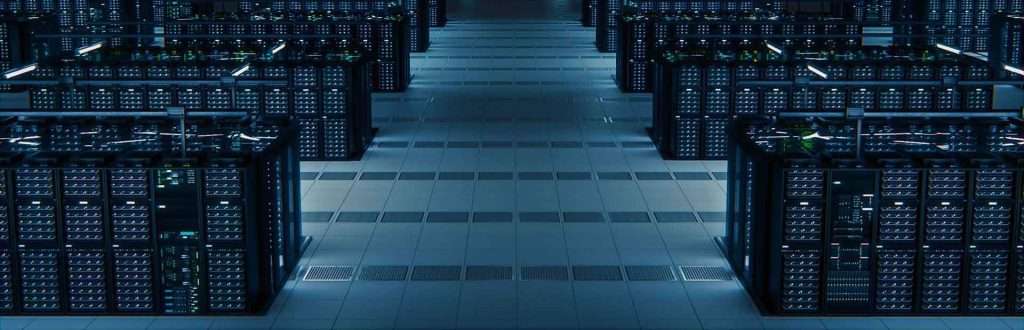
The Data Center Energy Crisis: A Looming Threat to Digital Infrastructure
The numbers are staggering—and accelerating faster than anyone predicted. Global data center electricity consumption is projected to reach 565 terawatt-hours (TWh) in 2026, a 26% increase from 447 TWh in 2025 . By 2030, that figure is expected to exceed 1,200 TWh—equivalent to the annual electricity consumption of Japan—while power demand will surge to 290 gigawatts (GW) .
This unprecedented growth is driven by one force: artificial intelligence. AI-optimized servers will account for 31% of all data center power consumption in 2026, up from just 95 TWh in 2025 . By 2027, their power consumption will surpass that of all conventional servers combined .
For data center owners and operators, this isn’t just a statistic—it’s a crisis unfolding in real-time. The rush to deploy AI workloads has created a perfect storm. Individual AI server racks now draw unprecedented power—NVIDIA’s GB200 NVL72 architecture reaches 132 kW per rack, and future Rubin systems will require between 250 and 900 kW . By 2028, the mythical 1 MW per rack barrier will be breached .
Yet securing adequate power has become the industry’s greatest bottleneck. Interconnection queues with local utilities now routinely exceed the time required to construct the data center facilities themselves . Energy prices remain volatile, regulatory frameworks grow increasingly complex, and local grid infrastructure simply wasn’t designed for the massive loads modern hyperscale data centers require. The stakes couldn’t be higher: Gartner warns that AI capacity is now constrained by power availability, making data center power security “the new battleground for scaling and protecting margins in the global AI race” .
Why Traditional Power Procurement No Longer Works
For decades, data centers relied primarily on utility power supplemented by diesel generators for backup. This model is rapidly becoming obsolete. Utilities across North America and Europe are struggling to keep pace with demand—Moody’s reports that the U.S. Department of Energy projects AI workloads will account for 9% of total U.S. electricity demand by 2030 .
The traditional approach leaves operators vulnerable in five critical areas:
Grid Availability: New interconnections face lengthy queues, delaying projects by years. Data center developers often secure land and build facilities long before power is actually available.
Energy Costs: Volatile wholesale electricity prices make long-term budgeting nearly impossible. Spot price spikes during extreme weather events can devastate operating margins.
جودة الطاقة: Modern IT equipment is increasingly sensitive to voltage fluctuations and harmonic distortion. Grid disturbances that were once manageable now pose serious risks to hardware and data integrity.
Sustainability Pressure: Corporate ESG commitments demand aggressive carbon reduction. Uptime Institute projects 75-125 GW growth in global data center power demand through 2030, driving greater reliance on gas turbines and intensifying emissions concerns .
قابلية التوسع: Expanding power capacity through utility upgrades is a slow, costly, and uncertain process. Data centers need flexibility to grow in phases as customer demand materializes.
This is why forward-thinking operators are abandoning the “plug and pray” model in favor of integrated energy infrastructure that combines on-site generation, battery storage, and intelligent energy management.
The AI Workload Power Dilemma
Artificial intelligence represents a paradigm shift in data center power requirements. Traditional enterprise workloads might consume 5-10 kW per rack. AI training clusters, by contrast, now demand 40-250 kW per rack—and future systems will push far beyond .
NVIDIA’s GPU roadmap tells the story of relentless power escalation:
| Generation | Year | GPU TDP |
|---|---|---|
| H100 | 2022 | 700W |
| B200/GB200 | 2024 | 1,000-1,200W |
| GB300 (Ultra) | 2025 | 1,400W |
| Vera Rubin (VR200) | 2026 | 2,300W |
| Vera Rubin CPX | 2026 | 3,700W |
| VR300 (Ultra) | 2027 | 4,000W+ |
Source: Morgan Stanley, Semianalysis
A single DGX H100 system with eight GPUs consumes approximately 10 kW. Now imagine a data center housing thousands of these systems—the power demands become astronomical.
This density creates unprecedented challenges:
Cooling Complexity: High-density racks generate enormous heat, requiring advanced liquid cooling or immersion systems that themselves consume additional power.
Load Fluctuations: AI workloads create dramatic power swings as training jobs start and stop, stressing both utility infrastructure and on-site systems.
Uptime Imperative: An AI training run costing millions cannot afford interruptions. Power quality and reliability directly impact ROI.
NextG Power’s solutions address these challenges head-on, providing the firm, high-quality power that AI workloads demand while maintaining flexibility for evolving requirements.
NextG Power: Transforming Energy Challenges into Strategic Advantages
NextG Power has emerged as a premier partner for data center operators navigating this complex energy landscape. With extensive experience deploying resilient and renewable energy resources across diverse environments, NextG Power brings unmatched expertise to every project.
What sets NextG Power apart is their holistic, customer-centric approach. They don’t simply install equipment—they design comprehensive energy ecosystems tailored to each facility’s unique characteristics and operational goals. Whether your priority is:
Energy Resiliency: Achieving near-zero downtime through redundant, islandable on-site generation
جودة الطاقة: Maintaining pristine voltage and frequency for sensitive AI hardware
Operational Flexibility: Scaling capacity up or down as workload demands evolve
Cost Optimization: Reducing energy expenses through arbitrage, demand response, and renewable integration
الاستدامة: Meeting aggressive carbon reduction targets with verifiable clean energy
…NextG Power builds the solution that aligns with your specific objectives.
Their integrated approach combines behind-the-meter generation, أنظمة تخزين طاقة البطاريات (BESS), advanced microgrid controls, and seamless utility interconnection. The result is a unified energy infrastructure that delivers reliability, efficiency, and sustainability simultaneously.
Deploying Integrated Resources for Firm Power Supply
At the core of NextG Power’s service offering is their ability to integrate diverse energy resources behind the meter. This integration transforms energy from a vulnerability into a competitive advantage.
Battery Energy Storage Systems (بيس)
NextG Power deploys containerized battery storage solutions that provide multiple benefits simultaneously:
الطاقة الاحتياطية: Instant response during utility outages, bridging the gap until grid restoration
حلاقة الذروة: Reducing demand charges by discharging batteries during expensive peak periods
تنظيم التردد: Maintaining grid stability and power quality for sensitive equipment
التكامل المتجدد: Storing excess solar or wind energy for use when generation dips
These systems are modular and scalable, allowing data centers to deploy capacity incrementally as needs grow.
Hybrid Generation Systems
Combining renewable sources with reliable firm power creates a resilient, sustainable energy mix. NextG Power’s solutions integrate solar photovoltaic (PV) arrays, wind turbines, natural gas generators, and fuel cells to match specific site conditions and objectives.
Intelligent Energy Management
Advanced software platforms monitor, control, and optimize all energy resources in real-time. These systems:
Predict load and generation patterns
Automatically switch between power sources
Participate in wholesale energy markets
Provide detailed reporting for ESG compliance
This intelligent orchestration ensures maximum efficiency and reliability while minimizing costs and carbon footprint.
Navigating Regulatory Complexity with Expertise
Data center energy projects face a labyrinth of regulatory requirements, from local zoning and permitting to state-level renewable portfolio standards and federal environmental regulations. Interconnection agreements alone can involve hundreds of pages of technical and legal specifications.
NextG Power brings deep regulatory expertise to every project. Their team understands the nuances of:
FERC and NERC compliance for grid-interconnected systems
State-level renewable energy credits (RECs) and incentives
Local permitting and environmental review processes
Utility tariff structures and interconnection procedures
This expertise translates directly to faster project timelines, reduced compliance risk, and optimized financial outcomes for clients.
The Financial Case for Integrated Energy Infrastructure
Beyond operational benefits, integrated energy infrastructure delivers compelling financial returns:
Reduced Energy Costs: By combining on-site generation with storage, data centers can reduce average electricity costs by 20-40% depending on market conditions.
Demand Charge Management: Commercial utility tariffs often include demand charges based on peak usage. Battery storage can shave these peaks, reducing monthly bills significantly.
Revenue Opportunities: Participation in frequency regulation, demand response, and wholesale energy markets can generate additional income streams.
Risk Mitigation: Reduced exposure to volatile utility prices provides budget certainty and protects margins.
Accelerated Time-to-Market: Deploying behind-the-meter solutions allows data centers to bring capacity online years faster than waiting for utility upgrades.
Preparing for Tomorrow’s Energy Demands
The data center industry’s energy demands will only continue growing. With global data center power demand expected to reach 290 GW by 2030 and grid supply projected to be insufficient to meet future construction needs, the operators who thrive will be those who take proactive control of their energy infrastructure today .
This means moving beyond utility reliance to a more sophisticated approach. It means embracing integrated, behind-the-meter solutions that provide reliability, flexibility, and sustainability simultaneously. Most importantly, it means partnering with an experienced provider who understands both the technical and regulatory complexities of data center energy infrastructure.
NextG Power has the experience, resources, and commitment to be that partner. Their integrated energy solutions help data centers not just survive the coming energy crunch, but turn it into a competitive advantage.
The Time to Act is Now
Every month of delay in securing reliable power costs data center operators millions in missed revenue and growth opportunities. The traditional utility-dependent model is broken. Forward-thinking operators are taking control of their energy future with integrated, behind-the-meter solutions.
Whether you’re planning a new hyperscale campus, expanding an existing facility, or upgrading AI infrastructure, NextG Power delivers the energy solutions you need to succeed.
Don’t let power constraints limit your growth. اتصل بشركة NextG Power today for a customized energy infrastructure assessment and discover how their proven solutions can secure your data center’s energy future.
الكلمات المفتاحية: data center power solutions, data center energy infrastructure, reliable power for data centers, NextG Power, energy resiliency data centers, renewable energy data centers, behind the meter solutions, data center sustainability, AI data center power, 5G data center energy, integrated energy infrastructure, resilient power supply, data center energy demand, battery energy storage systems, data center AI workloads