
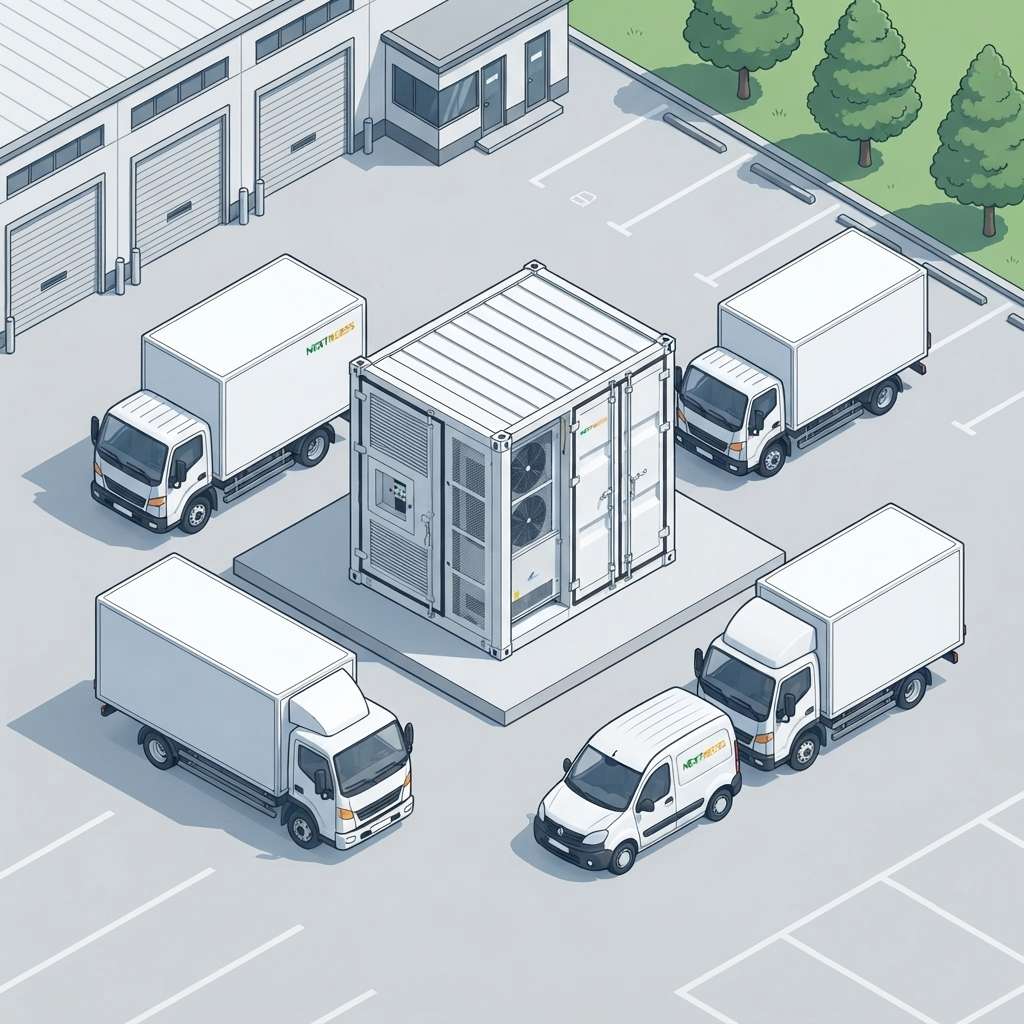
The electric vehicle revolution has long been shackled by a fundamental paradox: the very infrastructure designed to power it is often immobile. Fixed charging stations, while essential, are burdened by grid constraints, spatial limitations, and the logistical nightmare of installation in dense urban or remote environments. The conversation is shifting from “range anxiety” to “charger availability,” and the industry is finally acknowledging that a one-size-fits-all approach to infrastructure is a strategic dead-end. The solution, increasingly compelling, lies in high-capacity, intelligent mobile energy storage systems that redefine the “last mile” of EV charging.
This is not about a novelty service; it is a critical infrastructure evolution. The NextG Power MEV-D Series—available in both 400KW/836KWh and 800KW/836KWh configurations—represents a paradigm shift in how we think about energy distribution for electric fleets and individual vehicles alike. It moves beyond the limitations of the stationary charger by integrating massive battery capacity, a robust power conversion system (PCS), and multiple high-speed charging points into a single, deployable unit. This mobile EV charging station is engineered for the demands of professional environments where downtime is not an option and reliability is paramount.
The Technical Mandate: More Than Just a Battery on Wheels
The specifications of the MEV-D Series reveal a piece of equipment designed for the harsh realities of field deployment, not just a showcase concept. At its core is an 836KWh Lithium Iron Phosphate (LFP) battery pack from Tier-1 suppliers, operating at a nominal voltage of 665.6V. The choice of LFP chemistry is critical here. While other chemistries may boast higher energy density, LFP is renowned for its thermal stability, longer cycle life, and superior safety profile—non-negotiable attributes for a mobile asset that must operate reliably in diverse and often unmonitored environments.
The intelligence of the system is managed by an integrated Battery Management System (BMS) and a liquid cooling system. This is a crucial technical point often overlooked in marketing materials. Liquid cooling is not merely a performance enhancer; it is a safety and longevity necessity. By maintaining the battery pack within its optimal temperature range—crucial given the wide operating temperature from -10°C to 50°C—it ensures consistent power output, prevents performance-degrading thermal derating, and significantly extends the operational lifespan of the asset, lowering the levelized cost of storage (LCOS).
The 400KW vs. 800KW Question: A Strategic Choice
The MEV-D Series offers two distinct power outputs, allowing fleet operators and infrastructure providers to tailor their investment to specific use cases. The 400KW variant (MEV-D400836) is equipped with two charging guns, each capable of 200KW, making it ideal for mid-sized fleet depots, highway rest stops with fluctuating demand, or as a temporary, high-power event charging solution.
The 800KW variant (MEV-D800836) is a true heavyweight. With four 200KW guns, it can simultaneously fast-charge up to four vehicles. This capability transforms it from a mobile charger into a portable charging hub. For fleet operators managing a large number of commercial vehicles with tight turnaround times, this is not an upgrade; it’s a necessity. Both models, however, share the same physical footprint—2991*2440*2590mm and a significant 9000kg weight—underscoring that the higher power output is achieved through more advanced power electronics rather than a larger physical package, a testament to the system’s sophisticated engineering.
Safety and Durability: The Unseen Engineering
The deployment environment for a mobile charger is inherently unpredictable. It could be a muddy construction site, a dusty music festival field, or a high-traffic urban event with constant vibration and potential for debris. The MEV-D Series addresses these real-world threats with an IP54 rating for ingress protection against dust and water splashes, and a C4 anti-corrosion rating. This isn’t a “nice-to-have”; it’s a fundamental requirement for a mobile asset that must endure outdoor conditions for extended periods.
Furthermore, the inclusion of an aerosol fire suppression system is a testament to the maturity of the product. Unlike reactive safety measures, a proactive suppression system can be the critical difference between a contained thermal event and a catastrophic failure. This, combined with the inherent safety of the LFP chemistry and the vigilant BMS, positions the MEV-D Series as a solution that prioritizes the safety of both operators and the public.
Technical Specifications at a Glance
| Parameter | MEV-D400836 | MEV-D800836 |
|---|---|---|
| Gleichstrombatterie | ||
| Nennspannung | 665.6V (range 582.4~759.2V) | 665.6V (range 582.4~759.2V) |
| Nennkapazität | 1256Ah | 1256Ah |
| Energie | 836kWh | 836kWh |
| PCS | ||
| Rated AC Power | 250kW | 500kW |
| Overload Capacity | 110% long term | 110% long term |
| DC Operating Voltage | 615-950Vdc | 615-950Vdc |
| Laden von Elektrofahrzeugen | ||
| Rated Output Power | 400kW | 800kW |
| Charging Guns | 2 guns (200kW/gun) | 4 guns (200kW/gun) |
| Output Voltage Range | 200-1000Vdc | 200-1000Vdc |
| Allgemeine Daten | ||
| System Efficiency | >89% | >89% |
| Fire Suppression | Aerosol | Aerosol |
| Operation Temperature | -10°C ~ 50°C (>45°C derating) | -10°C ~ 50°C (>45°C derating) |
| IP-Schutzart | IP54, C4 | IP54, C4 |
| Kühlung | Liquid cooling for batteries | Liquid cooling for batteries |
| Dimensions (WxDxH) | 2991*2440*2590mm | 2991*2440*2590mm |
| Gewicht | ~9000kg | ~9000kg |
| Kommunikation | Modbus/IEC104, RS485/CAN/Ethernet | Modbus/IEC104, RS485/CAN/Ethernet |
Economic Advantages: Beyond the Initial Investment
From a total cost of ownership perspective, the MEV-D Series delivers measurable advantages. By integrating energy storage directly with charging capabilities, organizations can significantly reduce capital expenditure on grid infrastructure upgrades. The systems achieve low Levelized Cost of Storage (LCOS) through high energy density design and efficient power electronics.
Rated AC power supports sustained operation, with 110% long-term overload capacity providing headroom during peak demand periods. This efficiency-focused engineering translates into lower operational expenses and improved return on investment for forward-thinking organizations.
Strategic Applications in Professional Environments
The MEV-D Series is optimized for scenarios where traditional charging infrastructure falls short:
Fleet Electrification Programs
Large commercial fleets benefit from the ability to deploy high-capacity charging directly at depots or staging areas without waiting for utility grid enhancements. The substantial 836kWh storage capacity supports multiple high-power charging cycles, optimizing vehicle turnaround times.
Industrial and Remote Operations
Mining, construction, and utility projects in locations with limited grid access can maintain productivity with reliable electric equipment charging. The mobile nature allows repositioning as project requirements evolve.
Peak Demand Management and Grid Support
Organizations can strategically utilize stored energy to mitigate high demand charges or provide backup power during grid constraints. Parallel installation capabilities allow scaling to megawatt-level solutions as needs grow.
Event and Temporary Infrastructure
Major events, exhibitions, or emergency response operations gain access to professional-grade charging infrastructure that can be deployed and removed with minimal disruption.
Integration and Communication Capabilities
The MEV-D Series maintains wide compatibility with output voltages from 200-1000Vdc, supporting a vast array of current and future EV models. It supports industry-standard communication protocols including Modbus and IEC104, with interfaces for RS485, CAN, and Ethernet. This ensures seamless integration into existing operational technology and energy management systems, providing real-time monitoring and control capabilities essential for professional fleet operations.
A Call to Action for Infrastructure Architects
The era of static thinking is over. The mobile EV charging station is not a replacement for fixed infrastructure but a powerful extension of it. It offers a bridge to solve immediate capacity gaps, provides a rapid-response solution for emergency and disaster relief, and acts as a buffer against grid instability by using stored energy to provide peak shaving capabilities. The MEV-D Series from NextG Power moves this solution from a theoretical concept to an industrial-grade, deployable reality.
Evaluate your infrastructure needs not by the constraints of a concrete slab and a grid connection, but by the potential of a mobile, high-density energy asset. Kontakt NextG Power today to discuss how the MEV-D Series can fortify your EV strategy and operational resilience.
Schlüsselwörter: mobile EV charging station, high capacity EV charger, 800kW mobile charging, portable battery EV charging station, commercial fleet charging solution, industrial mobile EV charger, NextG Power, scalable EV infrastructure, off-grid high power charging, liquid cooling BESS, 836kWh battery storage, LFP battery, modular charging system