
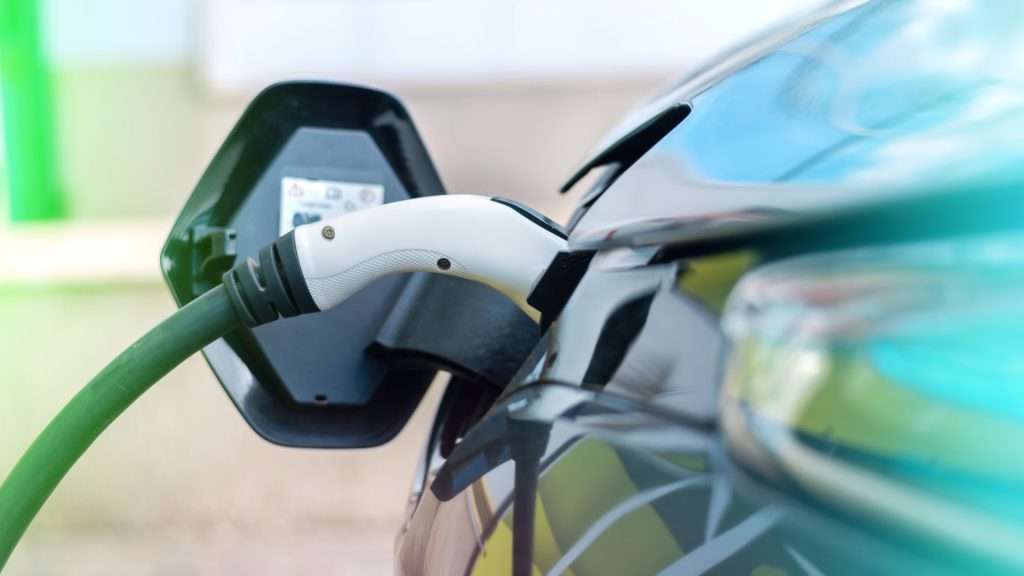
Charging your electric vehicle (EV) at home is significantly more cost-effective than using public charging stations. By leveraging time-of-use (TOU) plans, you can further reduce your charging costs while contributing to a more stable energy grid.
TOU plans incentivize shifting energy consumption away from peak demand periods, lowering utility costs and enhancing grid reliability. For EV owners, adopting TOU charging strategies can lead to substantial savings—potentially hundreds of dollars annually—on your electricity bills.
Read on to explore how TOU plans work, the optimal times to charge your EV at home, and how to maximize your savings with smart charging solutions.
Understanding Time-of-Use Plans
The U.S. is projected to consume 4,179 billion kilowatt-hours (kWh) in 2025, setting a new record for electricity demand. Usage peaks in the afternoon and evening due to heightened residential, commercial, and industrial activity, such as heating, cooling, and appliance use.
Widespread EV adoption could strain the grid further if charging occurs during these peak periods. To address this, utilities offer demand-response programs, maintain backup reserves, and promote TOU plans. These plans encourage reduced energy use during peak hours by charging higher rates, while offering discounted rates during off-peak periods, helping both the grid and your wallet.
Optimal Times for Home EV Charging
TOU rates may apply to your entire household energy consumption or specifically to your EV charger, depending on your utility’s plan. Most utilities structure weekdays into two or three pricing tiers—on-peak, off-peak, and sometimes mid-peak—with a single lower rate often applied on weekends.
Off-peak hours: Typically occur at night when demand is lowest, offering the cheapest rates.
On-peak hours: Usually in the afternoon and evening when energy use spikes.
Seasonal variations: In warmer regions, summer off-peak rates may be higher due to increased air conditioning use. In colder areas, on-peak rates may apply in the early morning or evening due to heating demands.
Estimating Your Savings with TOU Pricing
Consider a household with an average monthly electricity consumption of 900 kWh, plus 393 kWh for charging an EV (equivalent to driving 1,125 miles monthly, or 13,500 miles annually).
Case Study 1: Met-Ed in Pennsylvania
Without a TOU plan, a Met-Ed customer in Pennsylvania pays $0.17 per kWh, resulting in $153 for 900 kWh and $67 for EV charging, totaling $220 monthly. With Met-Ed’s TOU plan, which includes on-peak, off-peak, and super-off-peak periods, savings are significant:
If 80% of the 900 kWh is evenly spread across the day and 20% occurs at night, the base bill is approximately $155.
If 80% of EV charging occurs during super-off-peak hours and 20% during off-peak hours, the EV charging cost drops to $47.
Total savings: Approximately $240 annually.
Case Study 2: GEXA Energy in Texas
In Arlington, TX, GEXA Energy offers a standard rate of $0.17 per kWh, costing $153 for 900 kWh and $67 for EV charging, totaling $220 monthly. Their TOU plan provides a 100% credit for EV charging between 11 p.m. and 5 a.m. By scheduling 80% of EV charging during this period, the household saves $53 monthly, equating to over $630 annually.
Strategies to Maximize TOU Savings
Your savings depend on your utility’s rates and your charging habits. Use your utility’s EV charging cost calculators to estimate potential savings. Here are key strategies to optimize your TOU benefits:
Install a Level 2 EV Charger: Essential for many TOU plans, Level 2 chargers offer faster charging than Level 1, making it easier to charge during off-peak hours. Smart chargers with scheduling features allow you to plug in your EV upon arriving home, with charging delayed until off-peak rates begin.
Adopt Energy-Conscious Habits: For whole-home TOU plans, shift high-energy tasks like heating, cooling, cooking, or laundry to off-peak hours.
Explore Advanced Solutions: Home battery systems charged during off-peak hours can power your home during peak rates. Solar panels and smart electrical panels can further reduce grid reliance and prioritize essential circuits during high-rate periods.
Unlock TOU Savings with NextG Power’s EV Charger Installation
TOU plans can save you hundreds annually on EV charging, and a smart, programmable charger simplifies adherence to off-peak schedules. Check with your utility to confirm TOU plan availability and explore NextG Power’s professional EV charger installation services to optimize your home charging setup.
Ensuring a seamless installation backed by the NextG Power Satisfaction Guarantee. Trusted by automakers, charging station owners, utilities, and homeowners, NextG Power delivers expertise in energy transition solutions.
Contact NextG Power today to discover how we can simplify your electrification journey.