
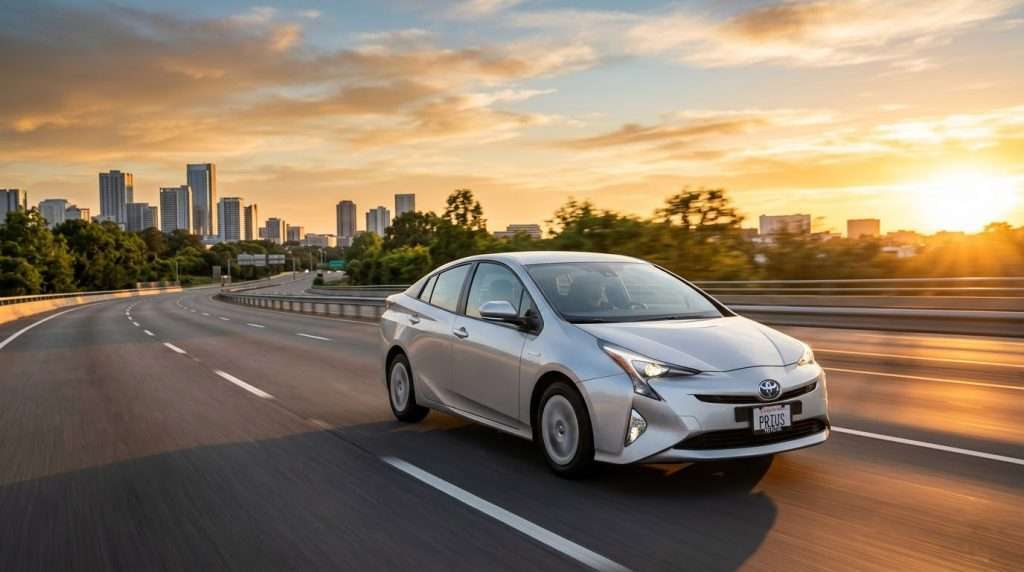
That dreaded yellow dashboard light. Every Toyota Prius and hybrid owner knows the feeling of dread when the “Triangle of Death” illuminates, signaling that your hybrid battery is finally giving up. For years, your only option was to shell out thousands for another heavy Nickel-Metal Hydride (NiMH) pack—essentially replacing old technology with more of the same. But the automotive world has evolved, and so should your thinking.
Welcome to the era of the lithium hybrid battery upgrade.
If your Toyota hybrid is approaching that critical 150,000 to 200,000-kilometer mark, you’re facing a decision. Do you repair with outdated technology, or do you upgrade to something genuinely better? The answer, for thousands of hybrid owners worldwide, has become increasingly clear: a lithium hybrid battery upgrade isn’t just a repair—it’s the single smartest move you can make for your vehicle’s future.
The Heavy Burden of Nickel-Metal Hydride
Let’s be honest about what you’re currently driving with. Nickel-Metal Hydride (NiMH) technology was revolutionary in 2004 when the Prius Gen 2 hit the roads. It was stable, safe, and reliable for its time. But by 2024 standards, carrying around a 40-kilogram NiMH battery pack is like hauling a suitcase full of bricks in your trunk everywhere you go.
NiMH batteries suffer from three fundamental problems that lithium technology solves completely. First, they’re physically heavy—really heavy. That mass sits behind your rear seats, affecting your car’s handling and fuel economy every single mile you drive. Second, they generate enormous heat during normal operation. Every time you brake or accelerate, those nickel cells struggle to keep up, forcing your cooling fan to run constantly and slowly cooking the battery from the inside. Third, they have a limited lifespan that typically ends between 150,000 and 200,000 kilometers.
For taxi drivers and high-mileage commuters—particularly in markets across Europe and North America—these limitations aren’t just annoyances. They’re profit-killers. As your NiMH battery degrades, your fuel economy drops, your engine runs louder and more frequently, and that satisfying electric torque you remember from when your car was new slowly disappears.
The NextG Power Lithium ion battery for HEVs
Here’s where the game changes. NextG Power recognized that hybrid owners didn’t want complicated engineering projects. They wanted a solution that worked—simply, reliably, and affordably. The result is the HEB Series, a 7.2V 6500mAh lithium module that represents the first truly hassle-free lithium hybrid battery upgrade on the market.
The genius of the HEB series design lies in its simplicity. These lithium modules are exact 1:1 physical replacements for your original Prius and Toyota hybrid prismatic cells. No cutting factory wiring. No mounting external “black box” controllers. No reprogramming the ECU. If your mechanic knows how to remove your old nickel cells, they already know how to install these lithium modules. It’s that straightforward.
This matters more than you might think. The hybrid repair industry has been flooded with complicated conversion kits that require splicing wires and mounting aftermarket electronics. They’re expensive, intimidating for DIYers, and introduce potential failure points. The NextG Power approach eliminates all of that complexity entirely.
Three Ways Lithium Transforms Your Driving Experience
The moment your new lithium hybrid battery upgrade is installed, your Toyota hybrid begins to feel like a different vehicle. Here’s what actually changes.
Shedding the Dead Weight
Remember that 40-kilogram brick? A NextG Power lithium pack weighs roughly 65 percent less than your old NiMH battery. We’re talking about removing nearly 25 kilograms from your vehicle—the equivalent of permanently taking a heavy suitcase out of your trunk.
Weight is the enemy of efficiency. Every kilogram you shed improves your acceleration, sharpens your handling, and reduces the workload on both your electric motor and gasoline engine. You’ll feel the difference the first time you pull away from a stoplight.
Thermal Efficiency That Protects Your Investment
Heat kills hybrid batteries. It’s the number one reason NiMH packs fail prematurely. Lithium-ion (specifically NMC chemistry) has significantly lower internal resistance than nickel. In plain English, this means your new battery can absorb regenerative braking energy much faster during deceleration and deliver that power more effectively during acceleration.
Because the lithium cells work more efficiently, they generate less waste heat. Your battery cooling fan runs less frequently and at lower speeds. During hot summer months, your battery stays in its optimal operating temperature range. Less heat stress means dramatically longer life.
Performance You Can Actually Feel
Here’s something Toyota hybrid owners rarely talk about: nickel batteries sag under load. When you need maximum power for highway merging, the voltage drops, and your electric motor can’t provide the assist it should. Lithium cells maintain higher voltage under load, which means your electric motor delivers consistent, powerful assistance whenever you need it.
The result is a car that feels genuinely younger. Your gasoline engine stays off longer in traffic. When you need to accelerate, the response is crisp and immediate. It’s not just a repair—it’s effectively a performance upgrade for your entire hybrid system.
The Economics Make Too Much Sense to Ignore
Here’s the part that makes hybrid owners do a double-take. In 2026, a high-quality lithium hybrid battery upgrade actually costs less than a comparable new NiMH pack. The massive scale of lithium production has driven costs down to the point where upgrading is genuinely cheaper than maintaining the status quo.
But the savings don’t stop at the initial purchase price. Consider the long-term economics. A typical NiMH replacement might give you another three to five years of service. A NextG Power lithium upgrade is rated for 42,000 cycles at 30-70%SOC 25 degree, that’s effectively the remaining lifespan of your vehicle itself.
For fleet operators and taxi owners, the math becomes irresistible. Fuel savings alone—typically 10 to 15 percent improvement in city driving—mean the upgrade pays for itself within 18 to 24 months of normal operation. After that, every kilometer you drive is pure profit compared to sticking with nickel technology.
Built for Real-World Conditions
The HEB Series isn’t some laboratory experiment. These modules are engineered to meet international safety standards. Whether you’re dealing with freezing winter starts or the high cooling demands of summer, high-grade NCM cells provide stable, safe, and powerful performance.
This matters because hybrid EV batteries live hard lives. They’re constantly cycling between charging and discharging, experiencing temperature extremes, and working to keep your vehicle efficient. NextG Power has engineered specifically for these demanding conditions, ensuring that your upgrade delivers reliable performance for years to come.
The Verdict: Don’t Just Fix Your Toyota Hybrid—Upgrade It
Here’s the truth that every Toyota Prius and hybrid owner facing battery failure needs to hear. You have a genuine choice. You can spend your money replacing old technology with more old technology, accepting the same weight, the same heat problems, and the same limited lifespan. Or you can step into the future with a lithium hybrid battery upgrade that makes your car lighter, more efficient, and genuinely more enjoyable to drive.
The nickel age is closing. Lithium technology has reached full maturity, costs have dropped below nickel alternatives, and installation has never been simpler. Thousands of hybrid owners worldwide have already made the switch to cleaner, more efficient driving with NextG Power. Your Toyota hybrid deserves the same upgrade.
Ready to give your Toyota Prius or hybrid the high-performance heartbeat it deserves? Связаться с нами today for a better hybrid EVs battery replacement solution and experience the difference for yourself.
Keywords: lithium hybrid battery upgrade, Prius battery replacement, Toyota hybrid battery, triangle of death, NextG Power, hybrid battery repair, NiMH vs lithium, HEV battery modules, Toyota Prius upgrade, 7.2V lithium module, drop-in hybrid battery, hybrid battery cost, Prius fuel economy, hybrid taxi conversion, Prius Gen 2 battery, Prius Gen 3 battery, Lexus hybrid battery