
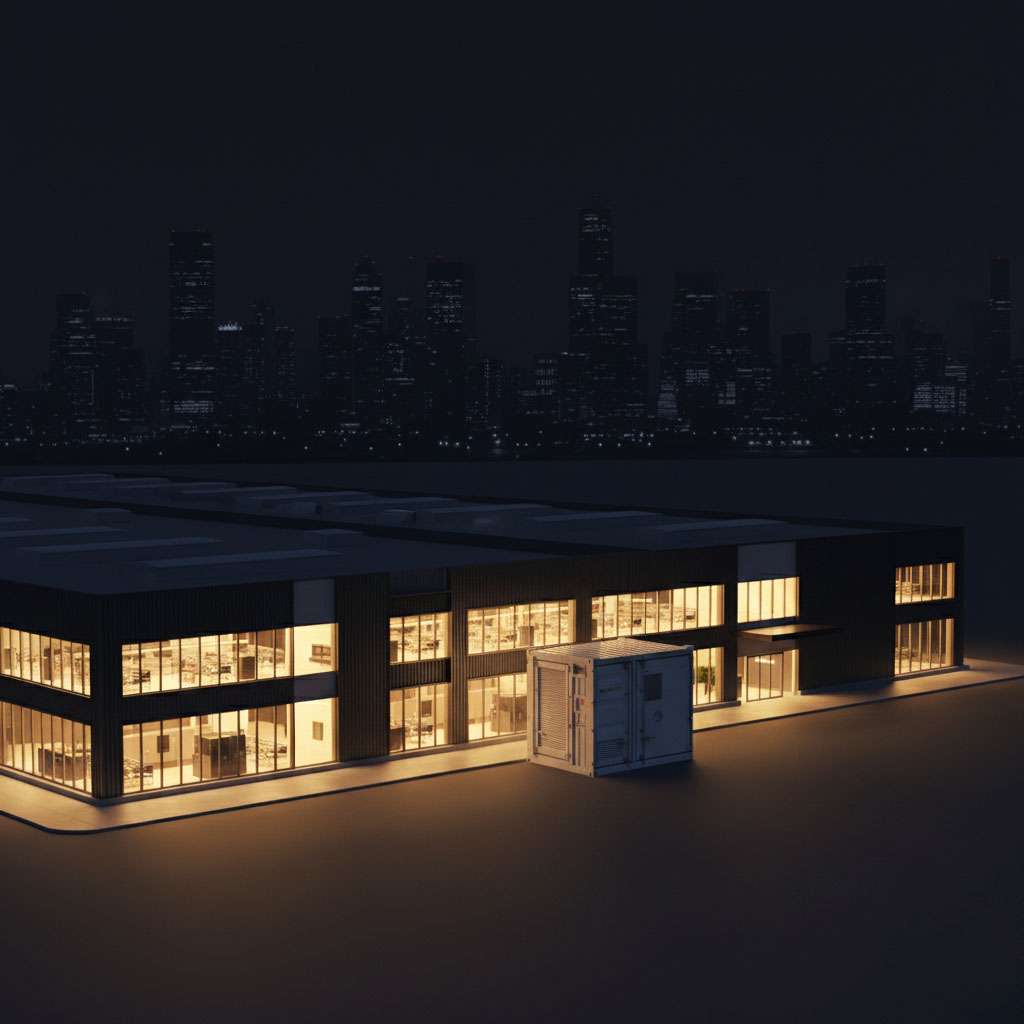
In the modern industrial landscape, silence is rarely a sign of peace. In a manufacturing plant, a data center, or a cold storage facility, silence usually means one thing: the power is out, the machines have stopped, and money is evaporating by the second.
For the last fifty years, the standard answer to this silence has been the diesel generator. It is a familiar sight behind almost every large commercial building—a hulking piece of machinery sitting on a concrete pad, rusting slightly, waiting for the worst to happen.
But as we near the end of 2025, the grid has changed. Weather events are becoming more extreme, and grid instability is manifesting not just as total blackouts, but as frequent voltage sags and “dirty power.” In this new environment, the 60-second lag time of a diesel engine is no longer just an inconvenience; it is a liability.
The era of fossil-fuel-based backup is fading. The future belongs to C&I battery storage.
Commercial and Industrial (C&I) аккумуляторные системы are rapidly replacing generators as the gold standard for business continuity. They offer a level of speed, intelligence, and financial return that diesel simply cannot compete with. Here is why your resilience strategy needs an upgrade.
The Problem with Mechanical Lag
To understand why C&I battery storage is superior, we have to look at the mechanics of the failure.
When the grid goes down, a diesel generator has to go through a physical sequence: sense the loss of voltage, signal the engine to crank, achieve combustion, warm up, and synchronize its frequency with the building’s electrical panel. Even with a well-maintained system, this process takes anywhere from 10 to 60 seconds.
For a warehouse lighting system, a minute of darkness is manageable. But for a precision manufacturing plant? That minute is catastrophic.
Plastics Manufacturing: Molten polymers cool and harden inside extruders, requiring hours of cleanup and scrapped materials.
Data Centers: Servers crash and require lengthy reboot sequences.
Healthcare: Sensitive imaging equipment resets.
Аккумуляторная батарея is not mechanical; it is chemical and digital. The response time of a modern Lithium-Iron Phosphate (LFP) system is measured in milliseconds. In many cases, the switchover to battery power is so seamless that sensitive electronics do not even register a blink. It is the difference between a “reboot” and a “non-event.”
Logistics: The Myth of Unlimited Diesel
A common argument for generators is, “I can just keep refilling the tank.” But can you?
Recent history has shown us that during major regional disasters—like hurricanes, floods, or deep freezes—supply chains break. Roads become impassable, and fuel trucks cannot make deliveries. A generator with an empty tank is nothing more than an expensive paperweight.
C&I battery storage, especially when paired with onsite solar, eliminates this supply chain risk. This configuration creates a “Microgrid” capability.
Grid Failure: The system detects the outage and “Islands” (disconnects) from the utility.
Daytime Operation: Solar panels power the facility и recharge the batteries.
Nighttime Operation: The batteries discharge to keep the facility running.
As long as the sun shines, you have an infinite fuel loop. You are no longer dependent on the road conditions or the availability of diesel fuel in your region.
Protecting Against “Dirty Power”
Blackouts make the news, but brownouts destroy equipment.
As the grid integrates more variable renewables, voltage instability is becoming a chronic issue. “Dirty power”—sudden spikes, sags, or frequency deviations—can wreak havoc on the Variable Frequency Drives (VFDs) and computer numerical control (CNC) machines that power modern industry.
A diesel generator is a blunt instrument. It is either “off” or “on.” It cannot help you during a 3-second voltage sag.
C&I battery storage systems function as facility-wide power conditioners. They constantly monitor the quality of the grid. If they detect a voltage dip, they instantly inject power to smooth the wave. This acts as a massive Uninterruptible Power Supply (UPS) for the entire building, protecting your capital assets from invisible wear and tear that generators essentially ignore.
The Financial Argument: Asset vs. Liability
Perhaps the most compelling reason to switch isn’t engineering; it’s economics.
A diesel generator is a pure liability. It costs money to buy ($50k – $500k+), money to fuel, money to permit, and money to maintain. It sits idle for 99.9% of the year, providing absolutely no value to the business until a disaster strikes. It is a “sunk cost” in the truest sense.
C&I battery storage is a performing asset.
When the grid is working (which is most of the time), the battery is hard at work earning its keep.
Peak Shaving: It discharges during times of high usage to lower your demand charges.
Load Shifting: It charges when electricity is cheap (night) and discharges when it is expensive (day).
Demand Response: It earns revenue by stabilizing the grid for the utility.
While a generator is an insurance policy you pay premiums into, a battery system is an insurance policy that pays dividends back to you. With the current Investment Tax Credits (ITC) covering 30% to 50% of the installation cost, the ROI case becomes undeniable.
Resilience is about more than just keeping the lights on; it is about protecting your operations, your equipment, and your bottom line.
Diesel generators served us well in the 20th century, but they are ill-equipped for the 24/7, high-tech demands of 2025. By switching to аккумуляторная батарея, you gain instant response times, protection against dirty power, and a financial asset that pays for itself.
Контакт our energy resilience team today to model a solar-plus-storage microgrid solution tailored to your facility’s critical loads.
Keywords: C&I battery storage, commercial battery backup power systems, industrial microgrid solutions, diesel generator vs battery storage, BESS business continuity, uninterruptible power supply for manufacturing, resilience against blackouts.