
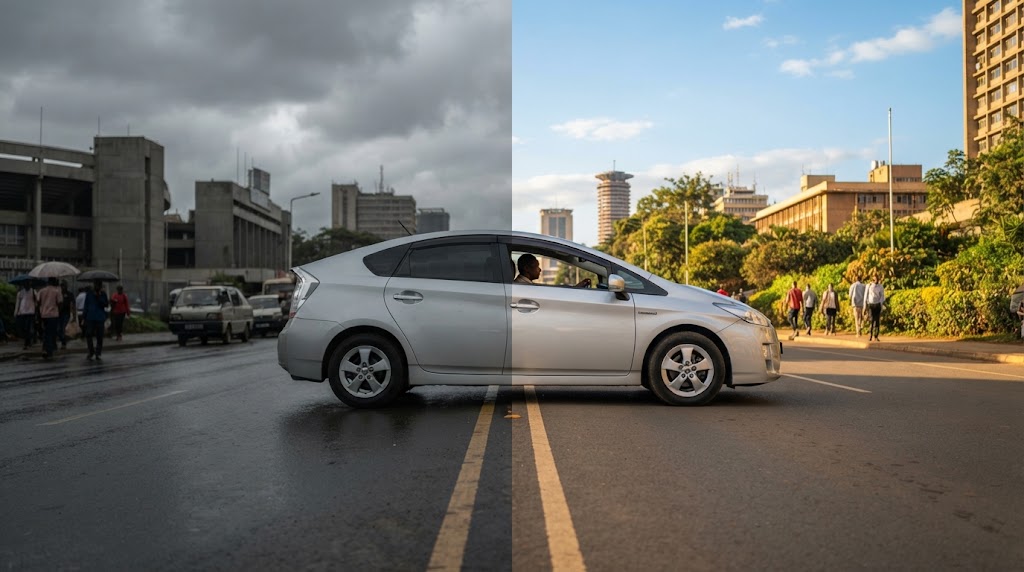
Fuel is the single biggest expense for commercial drivers in Nairobi and Kampala. Whether you drive for Uber, Bolt, Little Cab, or run your own delivery routes, every litre you burn directly reduces what you take home at the end of the shift. When a hybrid vehicle stops delivering hybrid efficiency, the numbers turn ugly fast.
Many drivers buy an imported Toyota Aqua, Fielder Hybrid, or Axio Hybrid expecting the famous Japanese fuel economy. On paper, these cars should return around 26 km per litre. In reality, a large number of them arrive with factory nickel-metal hydride batteries that are already eight to twelve years old. Once that battery weakens or fails, the hybrid system effectively disappears. The petrol engine runs almost continuously, and fuel consumption can fall to 14 km/L or worse. You are left driving a heavy, ordinary petrol car that still carries the hybrid badge. That is the “fake hybrid” trap, and it quietly drains the profits of thousands of East African drivers every month.
The Real Cost of a Failing Battery
When the high-voltage battery can no longer store and release energy properly, the car loses its ability to shut off the engine at traffic lights, crawl in pure electric mode, or recover energy under braking. The result is constant engine operation, higher fuel use, and a noticeable drop in responsiveness.
For a full-time ride-hailing driver covering 150 to 200 kilometres a day, the difference between 26 km/L and 14 km/L adds up to hundreds of extra litres of fuel every month. That extra cost comes straight out of daily earnings. The problem is especially painful because these vehicles were chosen precisely for their efficiency. Drivers pay a premium for a hybrid, only to discover months or years later that the battery has aged out of useful performance in local conditions.
Dead Weight That Punishes Rough Roads
Factory NiMH packs typically weigh between 35 and 40 kilograms and sit directly over the rear axle. On the smooth roads of Japan, this extra mass is manageable. On Nairobi’s potholed bypasses, Kampala’s uneven city streets, dirt access roads, and aggressive speed bumps, it becomes a liability.
Hauling that dead weight accelerates wear on rear shock absorbers, coil springs, and suspension bushings. Drivers notice the car feels heavier at the back, rides harsher over bumps, and requires more frequent suspension repairs. The extra mass also reduces ground clearance slightly and makes the vehicle less agile in tight traffic.
NextG Power Lithium-Ion Upgrades cut that battery weight by roughly 40 to 50 percent. Removing 20 to 25 kilograms from the rear of the car lightens the axle load immediately. The difference shows up in better ride quality, less stress on suspension components, and sharper handling. Over months of high daily mileage, the reduced wear translates into lower maintenance costs and fewer unexpected repair bills.
Capturing Energy in Gridlocked Traffic
Nairobi and Kampala traffic is famous for long periods of crawling and frequent stops. In these conditions, a healthy hybrid system should recover energy every time the driver brakes and then use that energy to move the car quietly in electric mode. Aging NiMH packs struggle with this cycle. Their higher internal resistance means they charge slowly and deliver power less efficiently, so the car spends more time running on petrol.
NextG Power lithium-ion HEV battery have very low internal resistance. They accept charge quickly from short braking events and release power smoothly when the car needs to move again. The result is longer periods of pure electric driving during stop-start commuting. The engine stays off more often, fuel stays in the tank longer, and the driver notices quieter, cooler operation even in heavy congestion.
The Simple Payback Math
Consider a typical full-time driver covering 150 to 200 kilometres each working day. Restoring proper hybrid function can easily return fuel economy to the mid-20s km/L range. The monthly fuel saving often reaches several hundred litres once the system is working as designed.
At current local fuel prices, those savings add up quickly. Most drivers who install a complete NextG Power Lithium-Ion Upgrade find that the entire cost of the battery is recovered through reduced fuel spending within six to nine months. After that point, the savings become pure additional income every shift. The lighter weight also reduces suspension maintenance costs over time, improving the overall return further.
This is not a theoretical benefit. Drivers who have already made the switch report clearer numbers on their weekly fuel receipts and more money left after covering platform commissions and other running costs.
Restoring the Hybrid Advantage
A hybrid only delivers its economic promise when the battery can store and release energy effectively. Once the original NiMH pack ages beyond useful performance, the vehicle becomes a heavy petrol car with an expensive badge. NextG Power Lithium-Ion HEV battery Upgrades reverse that situation by restoring strong electric assist, cutting unnecessary weight, and improving energy recovery in the exact traffic conditions East African commercial drivers face every day.
The upgrade does not change how the car is driven. It simply allows the hybrid system to work the way it was meant to work, delivering the fuel economy and responsiveness that justified choosing a hybrid in the first place.
Stop driving a heavy, sluggish gasoline car disguised as a hybrid. Contact NextG Power today to lighten your customer’s car, slash the fuel bill, and take home more money every shift.
Keywords: NextG Power Lithium-Ion Upgrades, fake hybrid trap Nairobi, Toyota Aqua battery replacement, Toyota Fielder hybrid battery, Toyota Axio hybrid upgrade, ride-hailing fuel economy Kenya, Kampala hybrid battery, low internal resistance lithium ion, lighter hybrid battery pack, hybrid fuel savings East Africa, NextG Power Li-Ion, commercial hybrid battery upgrade