
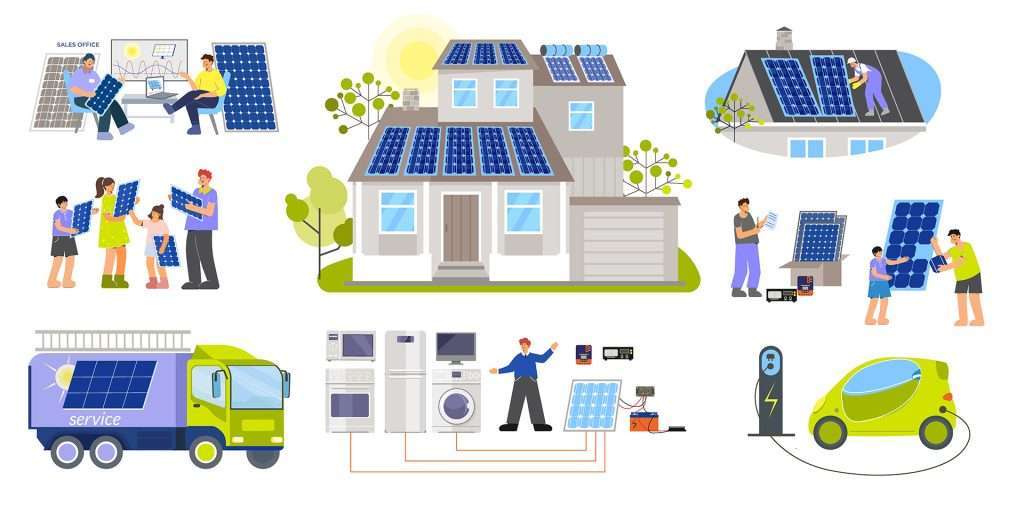
North America stands at the forefront of a clean energy transformation. As electricity costs rise, climate concerns intensify, and technology advances, solar power coupled with battery storage is emerging as the cornerstone of a modern, resilient energy system.
The synergy between solar photovoltaic (PV) systems and advanced energy storage is redefining how consumers and utilities generate, store, and manage electricity. This blog dives deep into why solar and battery storage are booming in North America, examining market trends, economic benefits, policy drivers, and the exciting innovations shaping the future of energy.
Table of Contents
The Solar Boom: North America’s Clean Energy Surge
Battery Storage: The Missing Piece in the Renewable Puzzle
Top Trends Accelerating Solar + Storage Adoption
Why Solar + Storage is a Smart Investment
Overcoming Challenges in the Solar Storage Market
Government Incentives Making Renewable Energy Affordable
The Road Ahead: Innovations and Future Projections
Is Solar + Storage Right for You?
1. The Solar Boom: North America’s Clean Energy Surge
Solar energy has experienced explosive growth across North America, with the U.S. and Canada leading the charge. Key factors fueling this expansion include:
Plummeting Solar Costs: Panel prices have dropped 80%+ since 2010, making installations more accessible.
Corporate & Utility-Scale Projects: Major companies (Amazon, Google, Walmart) and utilities are investing billions in solar farms to meet sustainability targets.
Residential Solar Adoption: Homeowners are embracing rooftop solar to slash electricity bills and gain energy independence.
According to the Solar Energy Industries Association (SEIA), the U.S. is on track to double its solar capacity by 2028, reaching 500+ GW—enough to power 100 million homes.
2. Battery Storage: The Missing Piece in the Renewable Puzzle
While solar panels generate clean energy, battery storage ensures that power is available around the clock. Here’s why storage is revolutionizing the energy sector:
Blackout Protection: Critical for areas prone to extreme weather (e.g., Texas winter storms, California wildfires).
Peak Shaving: Stores cheap solar energy during the day for use during expensive peak hours.
Grid Support: Helps utilities balance supply and demand, reducing reliance on fossil fuel “peaker” plants.
The U.S. energy storage market is expected to grow 15x by 2030, with installations hitting 100 GW, per Wood Mackenzie.
3. Top Trends Accelerating Solar + Storage Adoption
A. Falling Battery Prices
Lithium-ion battery costs have declined 90% since 2010, making solar + storage systems more affordable.
B. Rise of Hybrid Solar + Storage Systems
Homeowners and businesses are increasingly choosing integrated systems to maximize savings and reliability.
C. Virtual Power Plants (VPPs) Go Mainstream
Utilities are linking thousands of home batteries to create decentralized power plants, enhancing grid resilience.
D. EVs as Mobile Energy Storage
Vehicle-to-grid (V2G) tech turns electric cars into backup power sources, further supporting renewable integration.
4. Why Solar + Storage is a Smart Investment
 Slash Energy Bills
 Slash Energy Bills
Store solar power to avoid peak electricity rates, saving 50-90% on utility costs.
Energy Security
Keep lights on during outages—critical with increasing grid instability.
Boost Home Value
Homes with solar + storage sell 4.1% faster and at a premium, per Zillow.
Reduce Carbon Footprint
A typical home solar + storage system cuts 3-4 tons of CO₂ annually.
5. Overcoming Challenges in the Solar Storage Market
Challenge #1: Upfront Costs
 Solution:
30% Federal Tax Credit (ITC) until 2032
State rebates (e.g., California’s SGIP, New York’s NY-Sun)
$0-down solar loans and leases
Challenge #2: Grid Integration Hurdles
Solution:
Smart inverters that stabilize grid voltage
AI-powered energy management systems
Challenge #3: Battery Supply Chain Issues
Solution:
Recycling programs (e.g., Redwood Materials)
Alternative chemistries (sodium-ion, iron-air batteries)
6. Government Incentives Making Renewable Energy Affordable
U.S. Incentives
Federal ITC: 30% back on solar + storage installations (through 2032).
Net Metering: Sell excess solar power to utilities for bill credits.
State Programs: Texas’ property tax exemptions, Florida’s sales tax waiver.
Canadian Incentives
Canada Greener Homes Grant: Up to $5,000 for solar installations.
Provincial Rebates: Alberta’s $0.75/Watt solar incentive, Ontario net metering.
7. The Road Ahead: Innovations and Future Projections
The next decade will bring groundbreaking advancements:
Solid-State Batteries: Safer, longer-lasting storage (Toyota aims for 2027 rollout).
AI-Optimized Energy Systems: Machine learning to predict usage and maximize savings.
Floating Solar Farms: Installing panels on reservoirs to save land.
Community Solar Growth: Expanding access for renters and low-income households.
By 2035, solar could supply 40% of U.S. electricity, with storage ensuring reliability.
8. Is Solar + Storage Right for You?
The solar and battery storage revolution is no longer a distant dream—it’s happening now. With prices dropping, tech improving, and incentives available, there’s never been a better time to invest.
Next Steps: Check local incentives (Database of State Incentives for Renewables & Efficiency) Get quotes from certified solar installers Calculate your savings with the National Renewable Energy Lab’s PVWatts tool
The future of energy is clean, smart, and decentralized—will you be part of it? Contact us for a solution for free.